
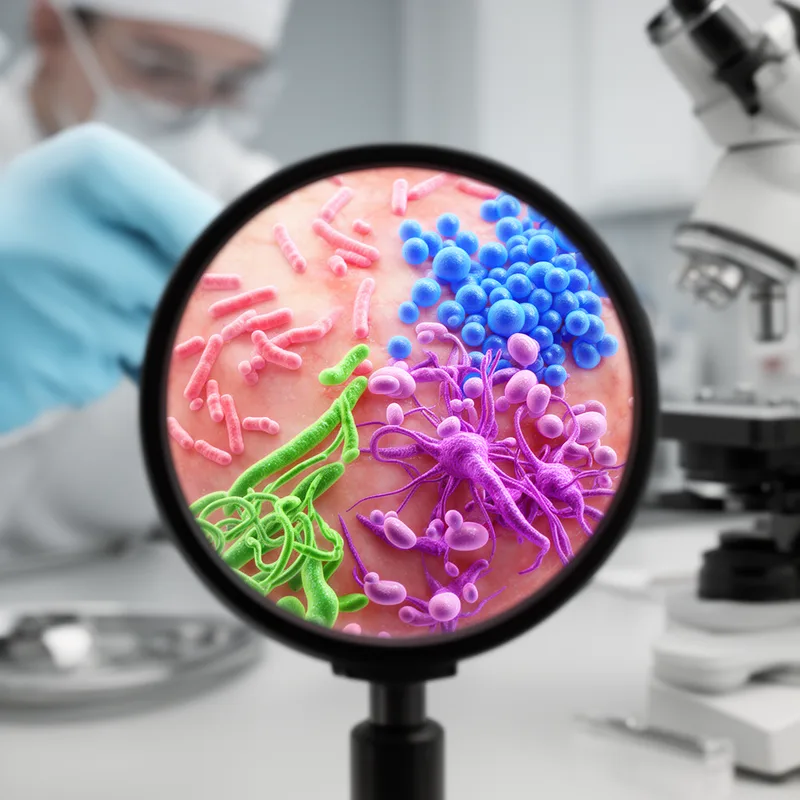
polymicrobial
- adjective
- /ˌpɒlɪˈmaɪkrəʊbiəl/
- Specialized
- The doctor diagnosed the patient with a polymicrobial infection that involved multiple types of bacteria.
- polymicrobial infection
- polymicrobial colonization
Examples
-
In cases of polymicrobial infections, antibiotics may be needed to target different microorganisms.
-
Research shows that polymicrobial infections can complicate recovery for patients with chronic wounds.
-
Our patient had a polymicrobial infection including two streptococcal pathogens.
Academic text (2007) -
These factors can result in severe, often polymicrobial, infections of otherwise relatively minor injuries (32).
Academic text (2014) -
This system is particularly important in the context of polymicrobial infections such as the Acinetobacter spp.
Academic text (2018) -
It is usually odontogenic and polymicrobial, and it occurs more frequently in immunocompromised and postoperative patients.
Academic text (2010) -
Polymicrobial infection has been noted in 50-81% of reported cases of necrotizing fasciitis (56).
Academic text (2007) -
Sepsis may be caused by gram-positive, gram-negative, and polymicrobial infection. Gram-negative infection most often occurs in the lungs.
Academic text (2017) -
The predominance of streptococcal and polymicrobial infection should be treated with broad-spectrum antibiotic coverage with special emphasis on streptococcal coverage.
Academic text (2007)
Surface Forms
Morphology
Etymology
The word polymicrobial combines the prefix poly- meaning 'many' and microbe meaning 'tiny life'. So a polymicrobial infection involves more than one kind of tiny living organism, which can make treatment more difficult.

