
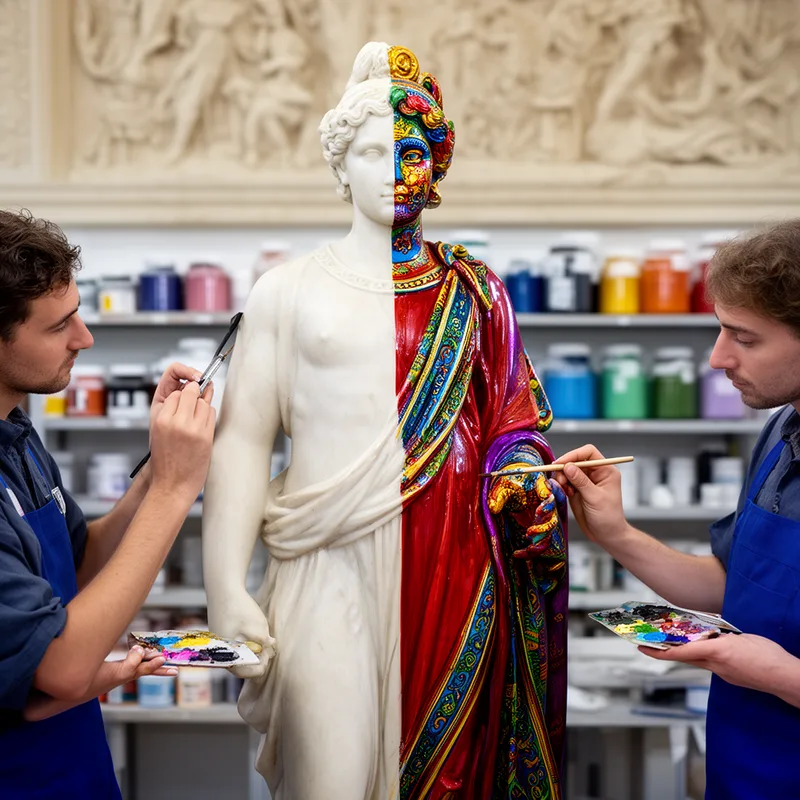
polychromy
- noun
- /ˌpɒlɪˈkrɒmi/
- Specialized
- The Lips plaques express an aesthetic that developed in the late ninth and early tenth centuries, characterized by simplicity in the rendering of the human form and a love of polychromy in architectural and sculptural decoration.
Examples
-
There are traces of polychromy or paint on the cheek and the sides of the eyes.
-
Experts believe that the polychromy of historical artifacts provides insight into the artistic techniques used by ancient civilizations.
-
And also the sort of painted polychromy and decorative surfaces in an architectural setting.
-
The bright surge rolled through the nave, full of the odor of decay, hurriedly swept past the walls covered with peeling polychromy, and broke right on the iconostasis.
Fiction book (2000) -
The ancient temple was renowned for its stunning polychromy, featuring vibrant colors that adorned the walls and statues.
-
During the exhibition, visitors admired the polychromy of the sculptures, which showcased a range of colors that enhanced their beauty.
Synonyms

 19
3.4
19
3.4

A planned set of colors used to make a room or item look good
 2
6.0
2
6.0
A set of colors used together for a product or design
 1
5.5
1
5.5
The way an artist chooses and uses colors in a work

To use strong colors in art or design to make it bright and vivid

The quality of having many bright colors

The study and use of color in art and music
Antonyms

How Colorful

Surface Forms
Morphology
polychromy = polychrome (semi-transparent) = poly + chrom + y
The noun is formed from the color-related base 'polychrome', but the shift to the abstract sense 'the use or practice of decorating' is not fully compositional for beginning learners.
Etymology
The word polychromy comes from the parts poly- 'many' and chroma 'colour', like the word monochrome which means 'one colour'. So polychromy means decorating things with many colours, which is why ancient statues and buildings could look brightly painted.