
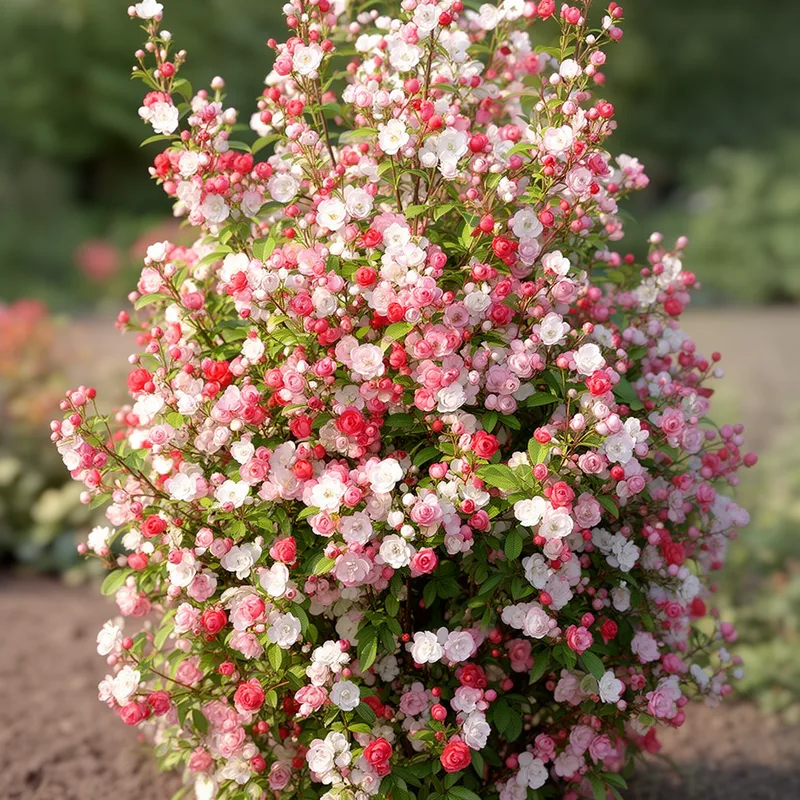
polyantha
- adjective
- /ˌpɒliˈænθə/
- Specialized
- Gardeners appreciate polyantha species for their ability to produce abundant blooms throughout the season.
Examples
-
In botanical texts, the term polyantha often appears in the Latin names of flowering plants.
-
The rose variety labeled polyantha is known for its clusters of small, colorful flowers.
-
Look at the stunning polyantha flowers in the park!
-
The polyantha rose is known for its resilience and beauty.
-
The rose variety labeled polyantha is known for its clusters of small, colorful flowers.
-
Gardeners appreciate polyantha species for their ability to produce abundant blooms throughout the season.
-
In botanical texts, the term polyantha often appears in the Latin names of flowering plants.
Synonyms
Producing many flowers

A plant that produces many flowers

A place covered with many flowers like a field in spring

Covered in many flowers that smell sweet
Compounds

- Specialized
A garden plant made by crossing primroses that has bright clusters of spring flowers
How Floriferous


Surface Forms
Morphology
polyantha = poly + anth
The meaning 'many-flowered' is only partly transparent because the floral element is classical rather than a familiar English word.
Etymology
Polyantha comes from Greek parts poly- 'many' and -antha 'flower', like polygon uses poly- for 'many'. So it literally means 'many-flowered' and describes plants that have lots of small blooms.