
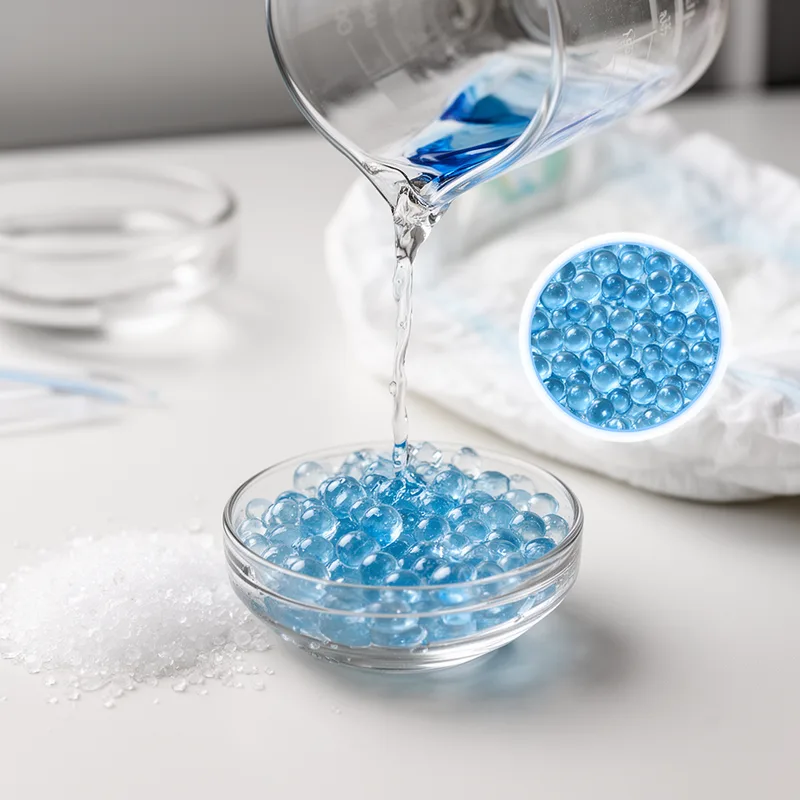
polyacrylamide


 1
9.1
- noun
- /ˌpɒliəˈkrɪləmɪd/
- Specialized
- In the laboratory, we used a polyacrylamide gel to separate the proteins by size during electrophoresis.
- polyacrylamide gel
- polyacrylamide gel electrophoresis
- polyacrylamide, or PAM
Examples
-
Photo: Physiologist Steven Kappes loads genotypic samples on a polyacrylamide gel to be separated by size of DNA fragment.
Academic text (1994) -
We improved the apparatus and conditions for polyacrylamide gel electrophoresis to determine the mobility of the isoenzymes of LDH and MDH.
Academic text (2013) -
You just got to get a polyacrylamide to enhance the nanoparticle and surfactant association between the two materials.
-
The equivalent of 10 mugs of proteins was resolved by 12% polyacrylamide gel electrophoresis and subsequently transferred onto a PVDF membrane.
Academic text (2018) -
The amplicons were separated on 10% polyacrylamide gels and visualized after staining with ethidium bromide.
Academic text (2013) -
About the same time, Shainberg became interested in another white powder—PAM, short for polyacrylamide—a material used in water treatment plants as a flocculent to clean up the water by precipitating small particles.
Academic text (1997) -
Because of ARS research, western farmers have stopped millions of tons of topsoil from washing out of irrigation furrows by adding small amounts of a safe, erosion-fighting powder called polyacrylamide, PAM for short, to irrigation water.
Academic text (2003) -
To analyze the DNA fragments, the scientists prepared a polyacrylamide gel that allows for clear visualization.
-
The researchers enhanced their experiment by using a polyacrylamide gel for better resolution of the molecular samples.
Surface Forms
Morphology
polyacrylamide = acrylamide (semi-transparent) = poly + acryl + amide
The word is a regular prefixation of the technical base 'acrylamide' with 'poly-', but the specialized chemical base limits immediate accessibility for general learners.
Etymology
The word polyacrylamide breaks into poly- meaning 'many' and acrylamide, which is related to acrylic, a common plastic used in paint and nails. So polyacrylamide is a material made of many small 'acrylic' parts joined together, which is why it forms gels and absorbs water.