
politeia
- noun
- /pəˈlɪtiə/
- Archaic
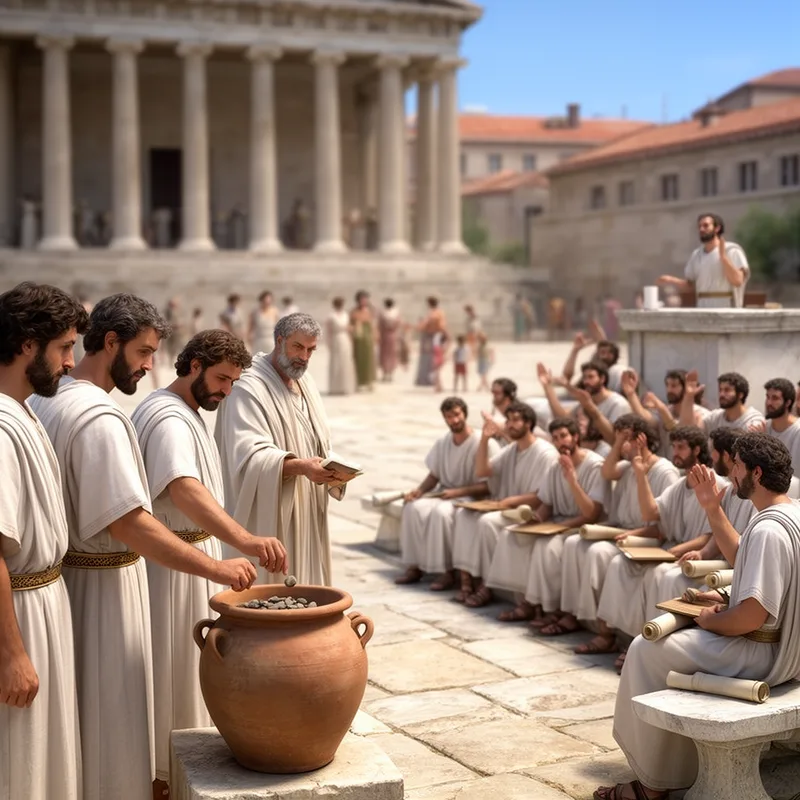
- Gaining politeia allowed individuals to vote and hold public office in the city-state.
Examples
-
In ancient Greece, politeia referred to the rights of citizens.
-
In ancient Athens, only men of certain birth could claim politeia and participate in government.
-
The philosopher discussed the concept of politeia in his writings about justice and society.
-
The concept of politeia is crucial in understanding democracy.
-
In ancient Athens, citizens with politeia had the right to participate in decision-making processes.
-
Achieving politeia was essential for individuals who wanted to engage in public affairs in ancient Greece.
-
The status of politeia determined one's ability to vote and be elected in the democratic city-state.
How Complete


Surface Forms
Etymology
Politeia is linked to the Greek word polites, meaning 'citizen', and is related to English words politics and polity. That's why politeia can mean the rights, duties, and legal status people have as members of a city or state.