
poker alumroot
- noun
- Specialized
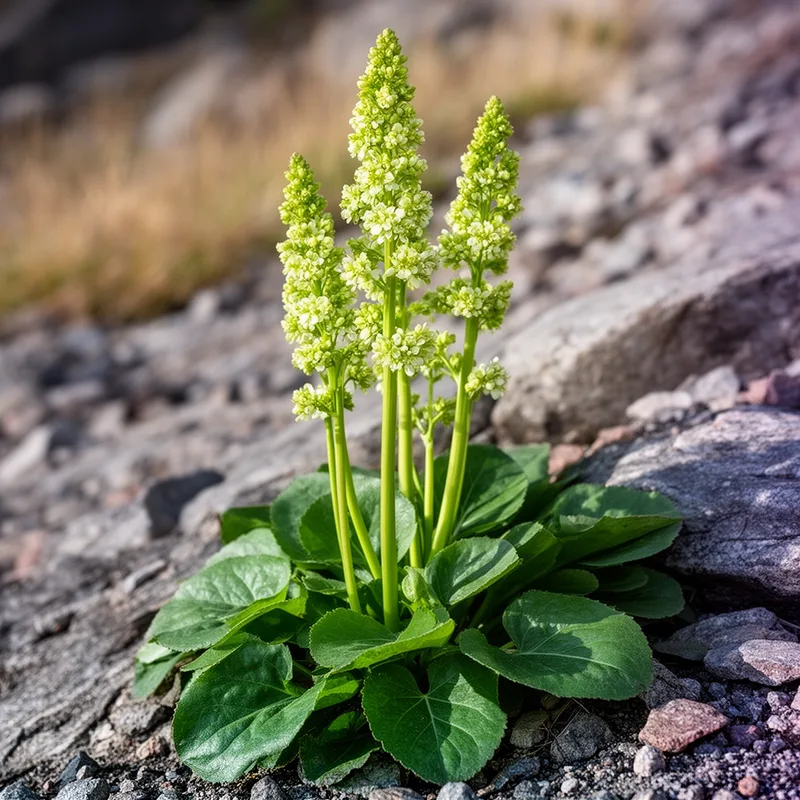
- Gardeners appreciate the leathery leaves and tall flower stalks of the poker alumroot.
Examples
-
During the spring, the poker alumroot produces clusters of greenish-white flowers high above its foliage.
-
The poker alumroot thrives in the rocky slopes of western North America.
-
The poker alumroot thrives in rocky soil.
-
Have you seen the poker alumroot blooming this spring?
-
In the garden, the poker alumroot stands out with its tall stalks and clusters of greenish-white flowers.
-
The poker alumroot is known for its leathery heart-shaped leaves and striking floral display during the spring.
-
You can spot the poker alumroot easily on rocky slopes, where it grows beautifully among the other plants.
Synonyms

A plant that lives for many years with thick heart-shaped leaves at the base and greenish-white flowers on tall stems

A long-lived plant with heart-shaped leaves at the base and pale greenish flowers on tall stalks from western North America
Surface Forms
Morphology
poker + alumroot
The compound clearly names a subtype of 'alumroot', so a learner who knows 'alumroot' would at least infer this is a plant (compositional element). However, the modifier 'poker' is ambiguous and does not transparently convey the specific botanical features or native range, so the full descriptive meaning is not predictable from the parts alone.
Etymology
Poker alumroot may come from two simple images: the plant's tall flower stalks that stick up and 'poke' like a poker, and its thick root called alumroot because people once used it like 'alum' in old medicine and cloth dyeing. So the name links how the plant looks and how its 'root' was used, which makes it easier to remember.

