

pointed arch
 1
6.8
1
6.8

- noun
- /ˈpɔɪntɪd ɑrtʃ/
- Specialized
- As pointed arches could support a greater weight and therefore a larger structure, walls were less important and could be thinner and cut by numerous windows.
- pointed arch and rib vault
Examples
-
The chamber was huge, perhaps two hundred paces long and nearly half as wide, with rows of thin white columns and that white rope running all the way around except where there were doorways, with double-pointed arches.
Fiction book (1992) -
More and more stone broke through the forest floor, a wave of rock rising up into a wall of a ruined church, with pointed arches containing intact stained glass windows and broken columns in its nave.
Fiction book (1999) -
In this way, the pointed arch created a possibility to build much higher and with much more light but most importantly with less use of material.
-
With pointed arches, however, weight moves diagonally away from the arch.
Academic text (1993) -
Here elegant, pointed arches have replaced the earlier more primitive rounded arches.
-
The shops, hotels, clubs, and counting houses are handsome stone buildings with deep arcade-like verandas surrounded by pointed arches.
Blog text (22) -
Renaissance style is the name commonly given to that transitional architecture where the pointed arch flattens and gives way to the round arch of the Greeks and Romans.
Academic text (1998) -
For Walpole, the pointed arch, the signature feature of the Gothic for eighteenth-century commentators, is an "improvement" on the heavy, round-headed arches of the classical tradition.
Academic text (2013) -
The cathedral's stunning pointed arch was a defining feature of its Gothic design.
-
Visitors were impressed by the intricate details of the pointed arch in the ancient church.
Synonyms
 41
3.5
41
3.5
A curved structure that spans an opening and supports weight
 5
9.3
5
9.3
A tall narrow arch with a sharp point used in Gothic churches
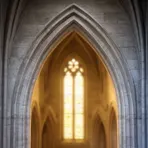
A stone arch with a pointed top often seen in cathedrals

A tall narrow pointed arch common in early Gothic churches

A pointed arch with S-shaped sides used in old churches

A pointed arch with S-shaped curves on each side like a ship's bottom
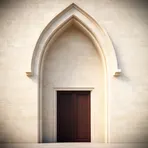
An arch with a gently pointed, shallow curve used in buildings

A wide, low arch with a gentle point used in old churches and houses
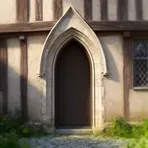
A low, slightly pointed arch used on old English buildings
How Pointed
- Specialized

- Specialized
1
6.8
- Specialized
- Specialized
- Specialized
Surface Forms
Morphology
The meaning 'an arch with a pointed apex' is directly and transparently derived from combining 'pointed' (tapered/sharp) with 'arch' (arched construction). This adjective+noun composition follows a regular compositional pattern common across languages and would be understandable to a B1 learner who knows the two constituents.
Etymology
Pointed arch comes from the real shape of an arch that has a sharp, pointed top. Builders in the Middle Ages found the pointed shape sent the roof's weight down into strong supports, so it could 'support' much taller, wider churches, and today the term means an arch with a pointed top used to hold up buildings.