
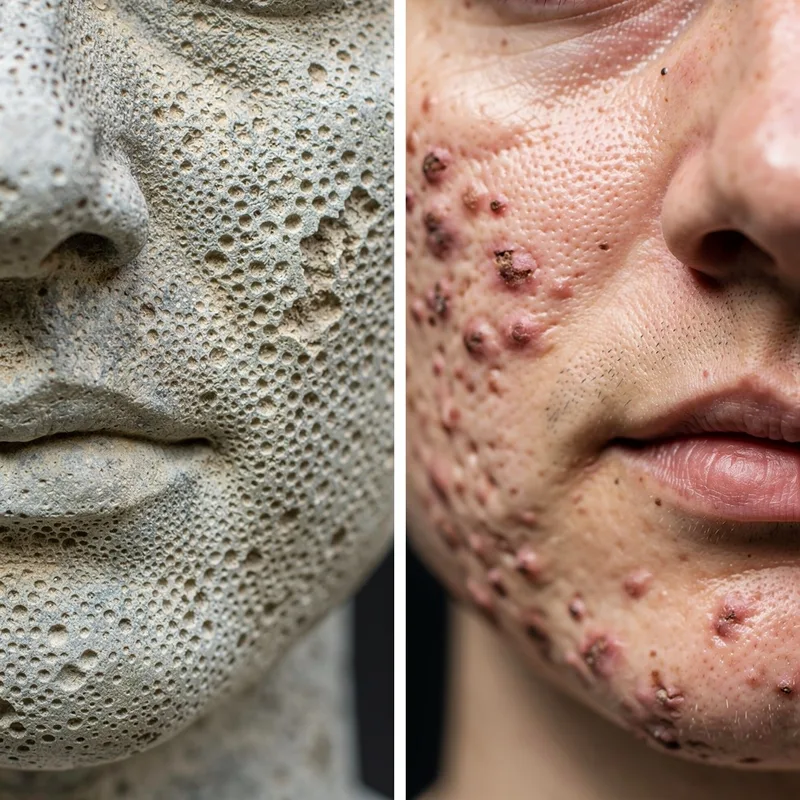
to pock
 4
9.6
4
9.6

- verb
- /pɑk/
- Archaic
- The child's face was pocked with scars from a childhood illness.
Examples
-
Many were eroded, many restored, and a few pocked by bullets, where someone had turned a gun on beauty.
Academic text (2007) -
Barbed wire stretched across a side street, strung from barrels pocked with bullet holes.
Fiction book (1996) -
There was no damage to his face, but his body was pocked with bruises.
Fiction book (2001) -
Then, he had been a peculiar-looking young man with a large pocked nose and wild brown hair.
Fiction book (2001) -
The building has not merely been abandoned; shelled during the fighting, it is pocked with craters.
Academic text (2001) -
The skin on his face is knobby like tree bark, pocked and stubbly with wiry black hair.
Fiction book (1992) -
The tall central cenotaph is dwarfed by an abandoned storage tank pocked with rust.
Fiction book (1996) -
The building appeared dilapidated from the outside, with pocked and scarred tin walls and a haphazardly constructed straw roof.
Fiction book (1992) -
In the popular imagination, the basin is a dry, crater-pocked land of endless scrub populated by tarantulas and jackrabbits.
Academic text (2005) -
His cousin's young, aggrieved, handsome face inside that sallow face blurred and pocked by fatigue.
Fiction book (1990)
Synonyms
 50
3.0
50
3.0
Leave a permanent scar on skin or a surface
 46
2.2
46
2.2
To make a small mark or stain on something
 15
3.4
15
3.4
Leave a permanent mark on the skin or a surface after an injury
 8
7.3
8
7.3
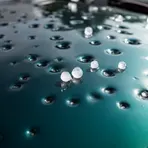
To make small dents on a surface
 7
7.9
7
7.9
To mark something with small scar-like pits caused by disease or damage
Antonyms
Compounds

How Damaged

Surface Forms
Etymology
Pock comes from the same old English word pocc, meaning 'pustule', so to pock is to make small pits or scars. Think of something being left with tiny 'pockets' or holes. That's why to pock means to mark or scar with little pits, as smallpox or acne can do.