
pneumomediastinum


 1
9.9
- noun
- /ˌnjuːmoʊˌmɛdiˈæstɪnəm/
- Specialized
- A chest x-ray demonstrated pneumomediastinum.
- symptom of pneumomediastinum
- spontaneous pneumomediastinum
- pneumomediastinum and emphysema
Examples
-
Most cases of pneumomediastinum are caused by surgery or trauma to the airway or upper gastrointestinal tract.
Academic text (2006) -
Spontaneous pneumomediastinum is rare, occurring once in every 7,000 to 12,000 hospital admissions.
Academic text (2006) -
A working diagnosis of pneumomediastinum was made.
Academic text (2006) -
The last of these is the usual etiology of spontaneous pneumomediastinum.
Academic text (2006) -
Treatment of pneumomediastinum is also conservative, but most experts advocate giving 100% oxygen to increase the rate of gas resorption.
Academic text (2006) -
The most common symptom of pneumomediastinum is a stabbing precordial chest pain that radiates to the arms and back.
Academic text (2002) -
A chest radiograph detected extensive subcutaneous emphysema of the right neck and shoulder together with a pneumomediastinum (Figure 1).
Academic text (2002) -
In the rare situation of hemodynamic embarrassment caused by tension pneumomediastinum, surgical decompression of the mediastinum might be indicated.
Academic text (2002) -
The classic sign of pneumomediastinum is Hamman's sign, a crunching sound over the precordium that is synchronous with ventricular systole.
Academic text (2006) -
Spontaneous pneumomediastinum is rare, occurring once in every 7,000 to 12,000 hospital admissions.
Surface Forms
Morphology
pneumomediastinum = mediastinum (transparent) = pneumo + mediastinum
Formed by the combining form 'pneumo-' (air) + 'mediastinum' (central chest space); the meaning 'air in the mediastinum' is a direct composition of these parts.
Etymology
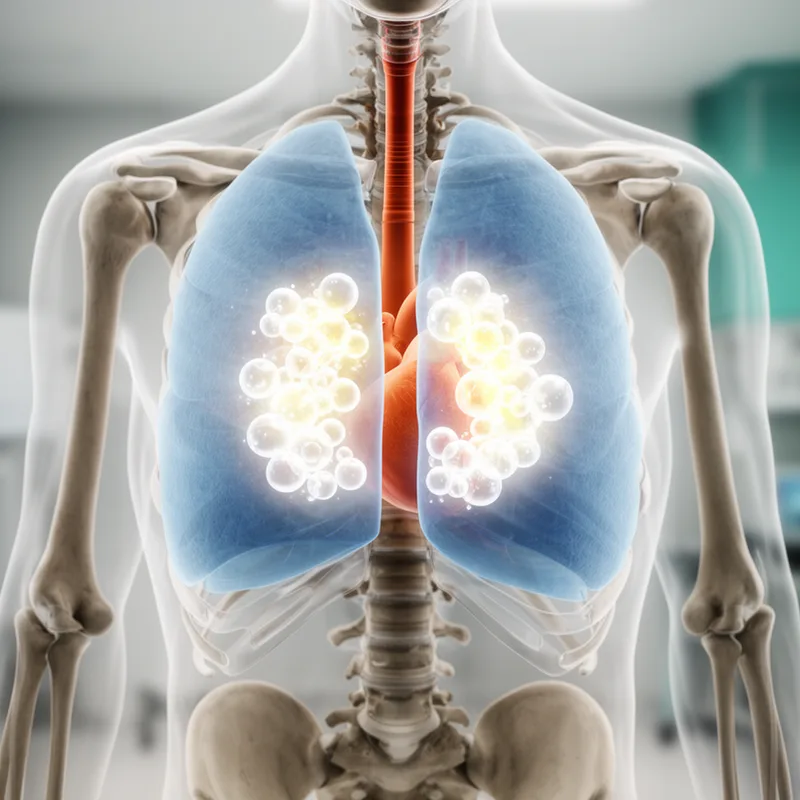
The word pneumomediastinum comes from pneumo- meaning 'air' and mediastinum, the 'middle' space in the chest between the lungs. So pneumomediastinum simply means 'air in the middle of the chest'.