
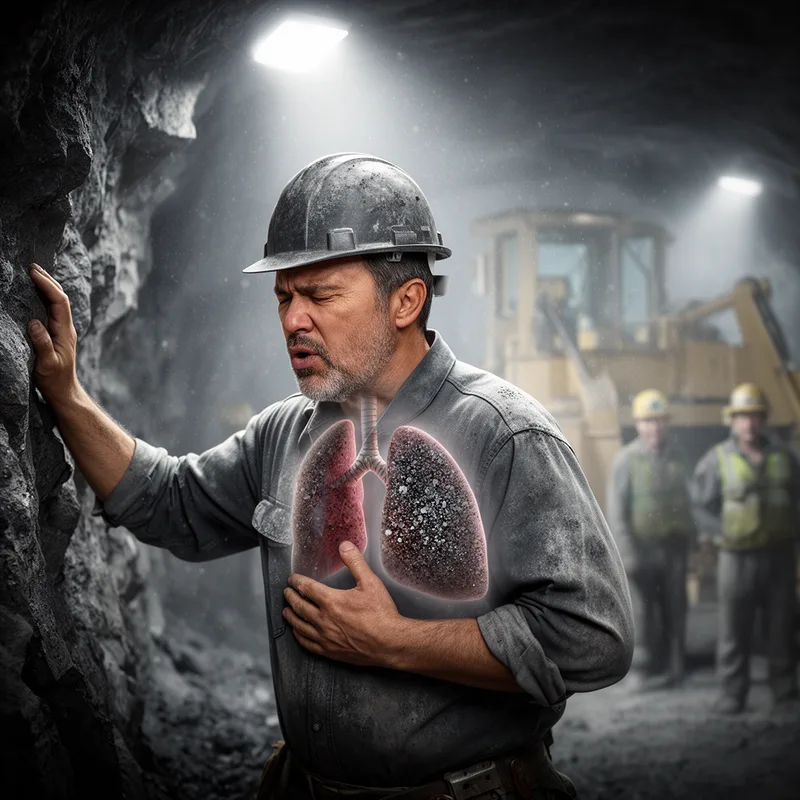
pneumoconiosis


 1
9.9
1
9.9
- noun
- /ˌnjuːməkoʊnɪˈoʊsɪs/
- Specialized
- We present an updated picture of pneumoconiosis prevalence and severity in U.S. underground coal miners as documented through active radiographic surveillance using a mobile examination unit stationed at or near working mines.
- coal workers' pneumoconiosis
- workers' pneumoconiosis
- abnormalities consistent with pneumoconiosis
Examples
-
Many former coal miners suffer from pneumoconiosis due to long-term exposure to dust.
-
The doctor explained that pneumoconiosis can lead to serious lung complications if not treated.
-
Readers classified them for the presence of pneumoconiosis.
Academic text (2012) -
Moreover, miners are probably unaware that they have pneumoconiosis, at least in the less severe stages of the disease, because it often presents without symptoms.
Academic text (2012) -
However, we are unaware of any evidence of differential participation between those with and those without radiographic evidence of pneumoconiosis.
Academic text (2012) -
Our findings have confirmed recent reports that the prevalence and severity of pneumoconiosis are higher among miners in Kentucky, Virginia, and West Virginia than among miners in other parts of the United States.
Academic text (2012) -
Iron, for example, is a catalyst for the Fenton reaction, which produces the toxic hydroxyl radical and is considered the pathogenic agent in pneumoconiosis.
Academic text (1994) -
Regular check-ups for pneumoconiosis are important for workers in mining industries.
Synonyms
 1
9.9
1
9.9
A lung disease that happens when you breathe in metal or rock dust and scars the lungs
How Severe
- Specialized
1
9.9

- Specialized
Surface Forms
Morphology
pneumoconiosis = coniosis (opaque) = pneumo + coni + osis
The components are medical combining forms (pneumo- 'lung', coni- 'dust', -osis 'disease') that are not obvious to average learners, so the meaning cannot be derived without specialist knowledge.
Etymology
Pneumoconiosis comes from Greek parts: pneumo- meaning 'lung', as in pneumonia, and -coniosis from konis meaning 'dust'. So, pneumoconiosis is a 'dust' disease of the 'lungs', which explains why it names a lung illness caused by breathing in dust.