
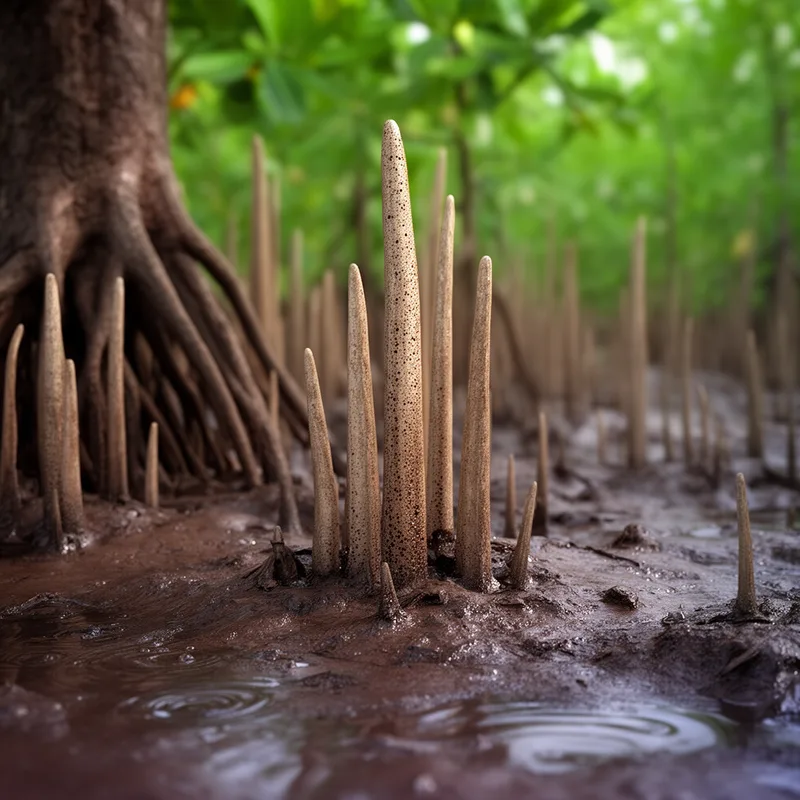
pneumatophore


 1
9.9
- noun
- /njuˈmætəˌfɔr/
- Specialized
- In wetland areas, pneumatophores help certain plants obtain oxygen from the air.
Examples
-
The pneumatophores of the cypress tree rise above the water, allowing it to survive in flooded conditions.
-
Adaptations to high and fluctuating water levels, such as pneumatophores, stilt roots, and buttresses, are required for the relatively nutrient-rich freshwater swamp forests.
Academic text (2011) -
The mangrove tree uses pneumatophores to breathe while standing in water during high tides.
Surface Forms
Morphology
pneumatophore = pneumatic (opaque) = pneumato + phore
Using the recognisable adjective 'pneumatic' as the nearest base, the addition of the technical combining element '-phore' yields the specialised noun, but both elements are technical and unfamiliar to most B1 learners.
Etymology
Pneumatophore comes from the Greek root pneuma meaning 'breath' and the ending -phore meaning 'bearer'. So a pneumatophore is a 'breath-bearer', an air-filled root that carries air to help a plant breathe, and you can remember pneuma from pneumonia, which is a lung illness about breathing.