
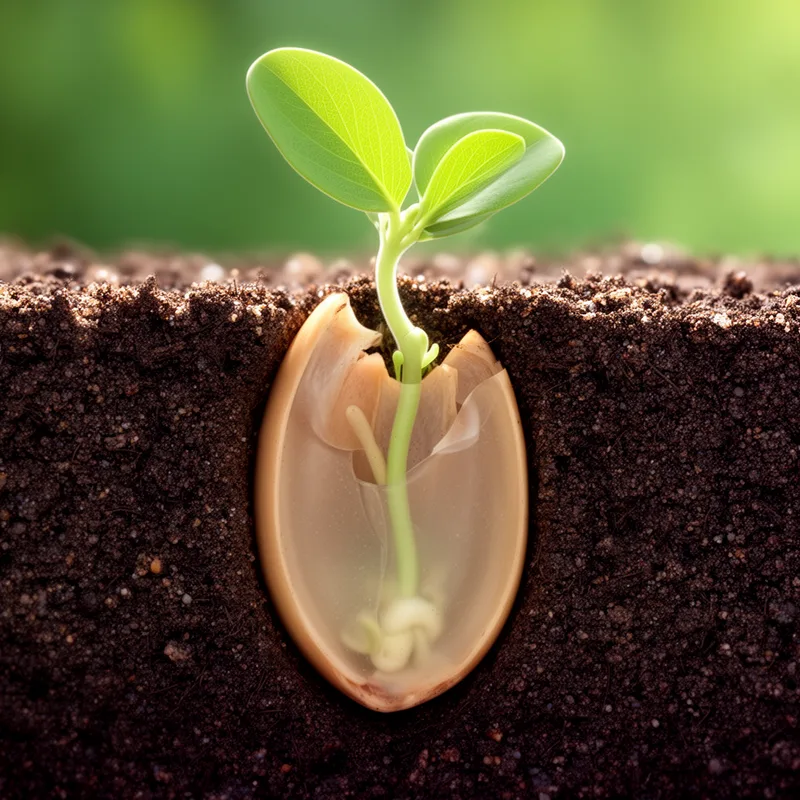
plumule
- noun
- /ˈplumjəl/
- Specialized
 :
plumón
:
plumón
- In a healthy seedling, the plumule will develop into the main shoot and leaves.
- plumule length
- germination percentage and plumule
Examples
-
Seed was considered germinated when both plumule and radicle had grown about 10 mm long or 5 mm in length, respectively.
Academic text (2014) -
From the results of the present study, it is clear that drought stress caused a significant reduction in germination percentage, plumule length, fresh biomass of seedlings, and germination rate, except for radical length; in contrast, it increased mean germination time.
Academic text (2014) -
Results indicated that the increase in drought stress significantly decreased germination percentage, plumule length, germination rate, and seedling fresh biomass, except for radical length, while, in contrast, it non-significantly increased mean germination time with respect to their control.
Academic text (2014) -
The plumule of the seed pushes through the soil as the plant begins to grow.
-
During germination, the plumule emerges first, indicating the start of the plant's development.
Surface Forms
Morphology
plumule = plume (semi-transparent) = plum + ule
The botanical sense is a metaphorical extension of 'small feather' to a tiny shoot; the relation exists but is specialized and may not be obvious to learners.
Etymology
Plumule comes from the Latin pluma 'feather' plus the small ending -ule, so it really means 'little feather' and is like the English word plume. That's why plumule is the tiny part of a seed that grows into the first leaves, like a small, delicate shoot.

