

plume poppy


 1
9.9
- noun
- They planted a plume poppy near the fence to showcase its spectacular flowers.
Examples
-
The plume poppy added dramatic height to the back of the garden border.
-
The plume poppy blooms beautifully in the spring.
-
Although beautiful, the plume poppy can be invasive if not carefully managed.
-
I planted several plume poppies in my garden.
-
In spring, the garden bursts into bloom with the delicate flowers of the plume poppy swaying in the breeze.
-
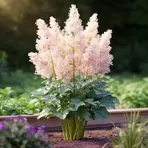
The plume poppy adds a stunning visual element to any landscape with its large, feathery clusters of creamy white flowers.
-
During the garden tour, she admired the tall stems of the plume poppy standing proudly among the greenery.
Synonyms
 1
9.9
A plant from eastern Asia that lives for several years and has tall feathery flower plumes
 1
9.9
A tall plant with large white flower plumes that is often grown in gardens
How Feathery

Surface Forms
Morphology
The phrase is a straightforward noun–noun compound: 'plume' (featherlike) modifying 'poppy' (a flowering plant), so the meaning — a poppy with feathery/ plume-like flowers — is directly derivable from the constituents. This is a common compositional pattern in English (and many languages), so a B1 learner who knows both words would readily infer the MWE's meaning.
Etymology
Plume poppy gets its name from the look of its flowers: plume means a 'feathery' cluster and poppy shows it is like other poppy flowers. So the name helps you picture a tall plant with large, creamy, feathery blooms.