
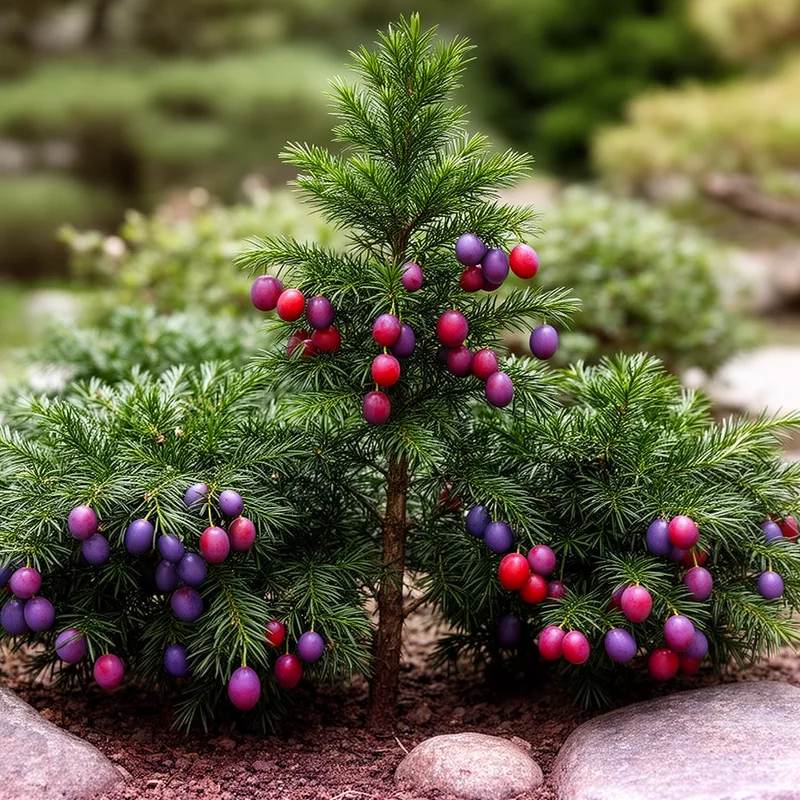
plum-yew family
- noun
- Specialized
- The plum-yew family is distinguished by its unique seed structure and evergreen leaves.
Examples
-
The plum-yew family includes several species of evergreen shrubs native to East Asia.
-
Many members of the plum-yew family are cultivated for ornamental purposes in gardens.
-
Botanists recently discovered a new species belonging to the plum-yew family in China.
-
The plum-yew family includes several species of evergreen shrubs.
-
Many gardeners appreciate the plum-yew family for its unique foliage.
-
Many members of the plum-yew family are cultivated for ornamental purposes in gardens.
-
Botanists recently discovered a new species belonging to the plum-yew family growing in China.
Synonyms
A group of evergreen shrubs and small trees that make cones and grow in East Asia and the Himalayas
Surface Forms
Morphology
plum-yew + family
The phrase transparently composes 'plum-yew' (a compound describing plum-like and yew-like features) with 'family' (a taxonomic group), so the meaning 'a family of plants with plum- and yew-like characteristics' is directly inferable from the parts. This kind of descriptive compound and the taxonomic use of 'family' is a common, cross-linguistic composition pattern, making it comprehensible to learners who know the constituent words.
Etymology
Plum-yew family comes from a simple picture: these plants have seeds that look a bit like a plum and leaves that look like a yew. So the name describes a 'family' of evergreen shrubs and small trees with plum-like seeds and yew-like leaves.

