

pliant
 3
5.6
3
5.6

- adjective
- /ˈplaɪənt/
- Soft, pliant, and warm.
- soft and pliant
- pliant flesh
- smooth and pliant
Examples
-
How many times must you frown to wear a groove in something as soft and pliant as skin?
Fiction book (1998) -
Not now, not in May, when cheerful birds build their nests and daffodils bob their heads above the pliant ground, but soon.
Fiction book (1998) -
"Temple?" The instant he felt the firm yet pliant flesh of her upper arm, he forgot what he was going to say.
Fiction book (1994) -
Here, a green man, as pliant as if he had no bones, grappled with one of the twig people.
Fiction book (1993) -
The hands, ah, the hands! Pliant on wrists that rotated through three hundred and sixty degrees.
Fiction book (1994) -
The flesh of his arm was unnaturally soft and pliant, like dough, and I shuddered.
Fiction book (1995) -
The branches he fended with his hands were pliant, and the boughs above their heads sighed with life.
Fiction book (1992) -
But his hands are marvellously deft and supple—the hands of an old race, slim, pliant, well-modelled, and exquisitely dexterous.
Blog text (22) -
The artist preferred to work with pliant clay that could be easily shaped into intricate designs.
-
These pliant materials are ideal for creating custom-fitted furniture that adjusts to any form.
Synonyms
 38
3.6
38
3.6
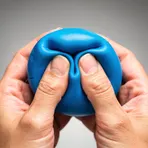
Easy to shape when soft, for example clay
 31
3.4
31
3.4
Able to bend easily without breaking and return to shape
 18
3.7
18
3.7
Able to bend or move easily and smoothly
 8
4.2
8
4.2
Easy to bend or shape
 3
6.0
3
6.0
A material you can shape and bend without breaking, like gold or clay
 2
2.5
2
2.5
Easy to move into new shapes
 1
3.0
1
3.0
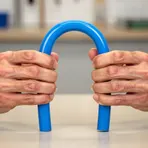
Can curve without breaking
 1
3.2
1
3.2
Able to be made smaller for easy carrying
 1
4.1
1
4.1
You can shape materials like clay when they are soft
 1
7.8
1
7.8
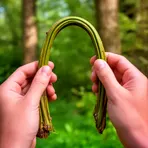
Able to bend easily and spring back without breaking, like a thin stick
 1
5.3
1
5.3
Able to be bent or shaped without breaking

Can be shaped or molded into a new form

A material that you can make into different shapes

Easy to bend without breaking, like a thin branch

Can bend or turn without breaking
Antonyms


How Flexible

Surface Forms
Morphology
pliant = ply (semi-transparent) = pli + ant
The adjective is built from a root meaning 'bend' plus the adjectival suffix '-ant', so the sense of flexibility is related to the root meaning but the root form 'pli-/ply' and the suffix are not fully transparent to average learners.
Etymology
Pliant comes from the Latin root plicare meaning 'to fold' and shares this root with the common word apply. Think of folding something thin so it bends easily, and that's why pliant means 'easily bent' or flexible.