
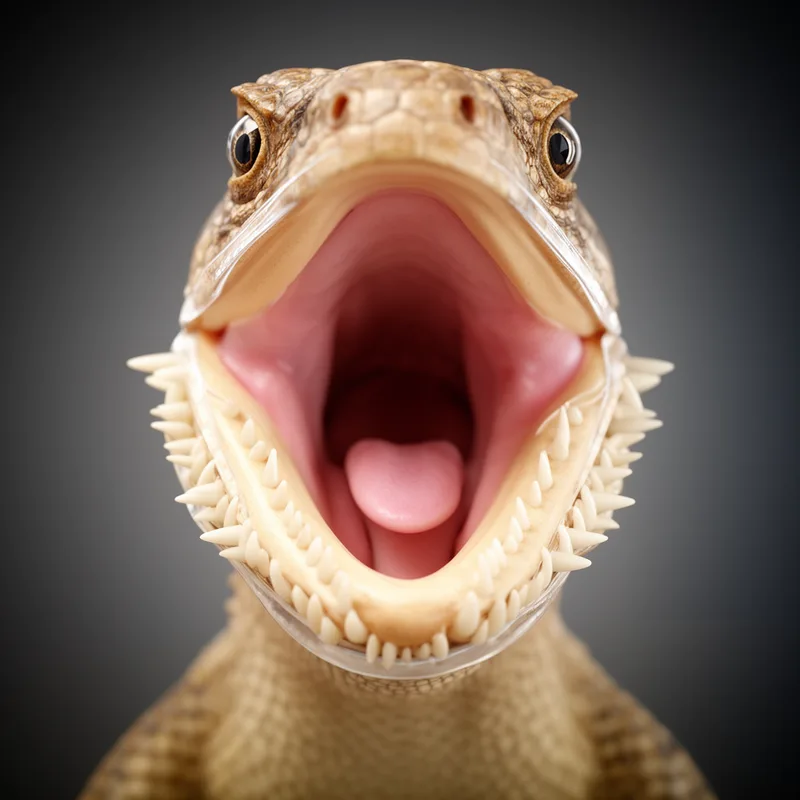
pleurodont
- noun
- /ˈplʊərəˌdɒnt/
- Specialized
- Several lizard species are classified as pleurodont due to the way their teeth are fixed to their jaws.
Examples
-
Some reptiles, like iguanas, are classified as pleurodonts.
-
Paleontologists identified the fossil as a pleurodont based on its distinctive dental structure.
-
Unlike thecodonts, a pleurodont has teeth that are not set in sockets but attached along the inner jaw.
-
The pleurodont species are fascinating to study.
-
Paleontologists identified the fossil as a pleurodont based on its distinctive dental structure.
-
Several lizard species are classified as pleurodont due to the way their teeth are fused to their jaws.
-
Unlike thecodonts, a pleurodont has teeth that are attached along the inner jaw rather than set in sockets.
Surface Forms
Morphology
pleurodont = tooth (opaque) = pleuro + dont
Formed from specialized Greek combining forms ('pleuro-' and '-dont') that are not familiar to average learners, so the meaning cannot be reliably derived from English base words.
Etymology
The word pleurodont comes from Greek parts pleuro- meaning 'side' and -dont meaning 'tooth', seen in English in words like orthodontist, a tooth doctor. So, it literally means 'side tooth' and that helps you remember that a pleurodont has teeth attached to the inner side of the jaw instead of sitting in sockets.

