

pleurocarpous
- adjective
- /ˌplʊərəˈkɑrpəs/
- Specialized
- Unlike acrocarpous mosses, the pleurocarpous types have reproductive organs on lateral branches.
Examples
-
Many moss species in temperate forests are pleurocarpous, spreading extensively along the soil surface.
-
A pleurocarpous growth form allows these mosses to cover large areas like a green carpet.
-
The pleurocarpous moss species can be found in shaded areas.
-
Is this moss pleurocarpous or acrocarpous?
-
Many mosses that are pleurocarpous grow low to the ground, forming dense mats in moist environments.
-
The pleurocarpous mosses thrive in dimly lit forests, where their unique branching allows them to absorb nutrients efficiently.
-
Identifying pleurocarpous mosses can be intriguing, as they differ from acrocarpous species in their branching patterns.
Antonyms

Compounds
- Specialized
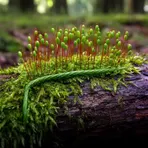
A moss that has its reproductive parts on short side branches, not the main stem
Surface Forms
Morphology
pleurocarpous = carpous (opaque) = pleuro + carp + ous
This is a specialized botanical formation from Greek combining forms and is not readily interpretable by average learners from its parts.
Etymology
The word pleurocarpous comes from Greek parts pleuro- meaning 'side' and -carpous meaning 'fruit' or 'fruiting'. So it means 'fruiting on the side', which explains why these mosses have their reproductive parts on short side branches rather than at the tip.

