
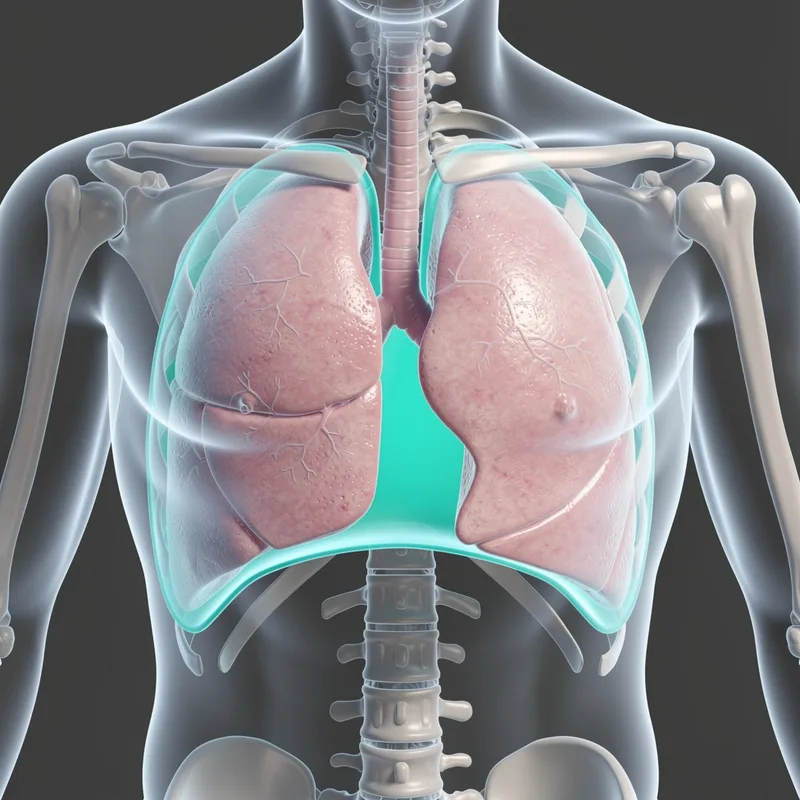
pleural
 9
8.8
9
8.8

- adjective
- /ˈplʊrəl/
- Specialized
- The clinical behavior of SFT is unpredictable, and up to 23% of pleural SFTs are clinically aggressive.
- pleural effusion
- pleural abnormalities
- pleural cavity
Examples
-
We'll also test the pleural fluid from the thoracentesis to create a more targeted antibiotic strategy.
-
Cirrhosis of the liver can be associated with a right-sided pleural effusion in about 5% of cases.
Academic text (2007) -
Pressure building in the pleural cavity.
-
We're in the pleural sac.
-
Pericardiac pain is similar to pleural pain, but tends to be more central.
Academic text (2010) -
Evaluation this time showed a large pleural effusion on the right side.
Academic text (2007) -
A history of occupational exposure to substances such as asbestos may suggest lung or pleural issues.
Academic text (2010) -
The likely etiology of the pleural effusions was judged to be VLS in conjunction with congestive heart failure.
Academic text (2007) -
Infection often spreads to the mediastinum, the pleural cavities, and the pericardium through the fascial planes.
Academic text (2004) -
The doctor explained that the pleural membranes are essential for lung function.
Compounds
- Specialized
1
8.2
The thin space between the two layers around the lungs that holds a little fluid
- Specialized
1
6.4
The space inside the chest around the lungs between two thin layers
Surface Forms
Morphology
Etymology
Pleural comes from the Greek word pleura, meaning 'side' or 'rib', so pleural describes the sides of the chest and the thin membranes that cover the lungs.