
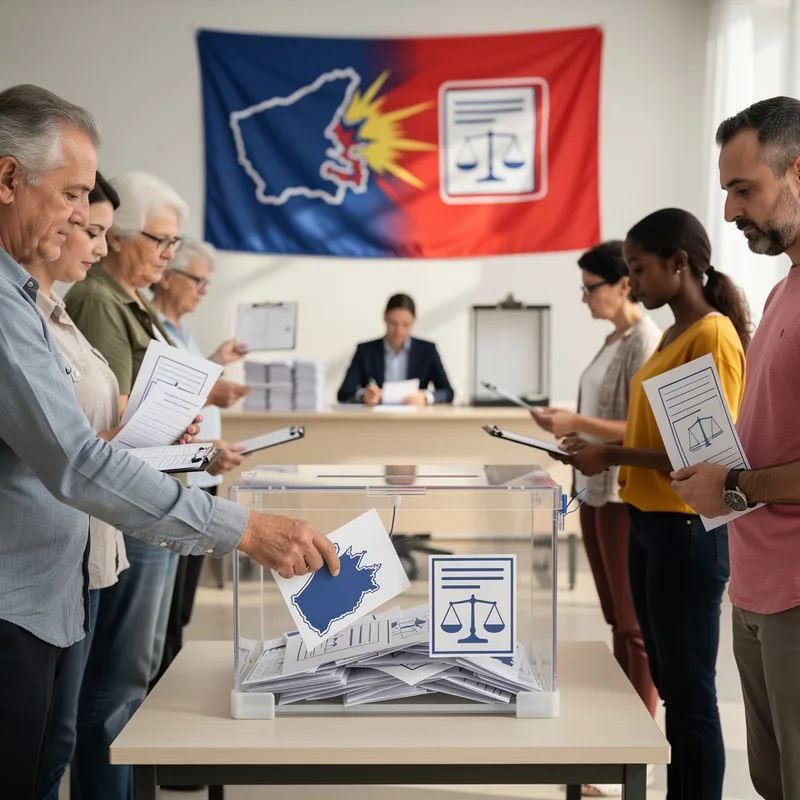
plebiscite
 5
8.8
5
8.8

- noun
- /ˈplɛbɪˌsaɪt/
- Specialized
- We can't resort to plebiscites time and time again.
- plebiscite held
- national plebiscite
- 1988 plebiscite
Loading YouTube…
Watch on YouTubeWe demand plebiscites in those areas of our country that you wish to take from us.
- We demand plebiscites in those areas of our country that you wish to take from us.
Examples
-
However, the plebiscite on the constitution was noncompetitive and offered no safeguards for the opposition.
Academic text (1992) -
Papadopoulos was proclaimed provisional president, and a plebiscite ratifying the change was scheduled for 29 July 1973.
Academic text (1990) -
After this, there would be a plebiscite on the region's future.
Academic text (1995) -
Second, an election is not a substitute for a plebiscite or referendum.
Academic text (1995) -
Elections, particularly a plebiscite on status in a colony, are not a real exercise in democracy.
Blog text (29) -
We demand plebiscites in those areas of our country that you wish to take from us.
-
85% of German voters chose to grant him even more power in the August 1934 plebiscite.
Blog text (32) -
Mr. President, um... I'm here... because the people of East Timor, in a plebiscite, chose to be independent.
-
The ability of these machines to influence both the 1993 plebiscite and the process of constitutional revision should not be underestimated.
Academic text (1991) -
The government announced that a plebiscite would be held to decide on the proposed constitutional changes.
Synonyms
 197
5.6
197
5.6
A public vote where people decide on one political question
Surface Forms
Etymology
The word plebiscite comes from the Latin plebs meaning 'common people' and from plebiscitum, a word for a decision made by those people. So a plebiscite today is a direct vote where the people decide an important public question, like a change to the constitution or independence.