
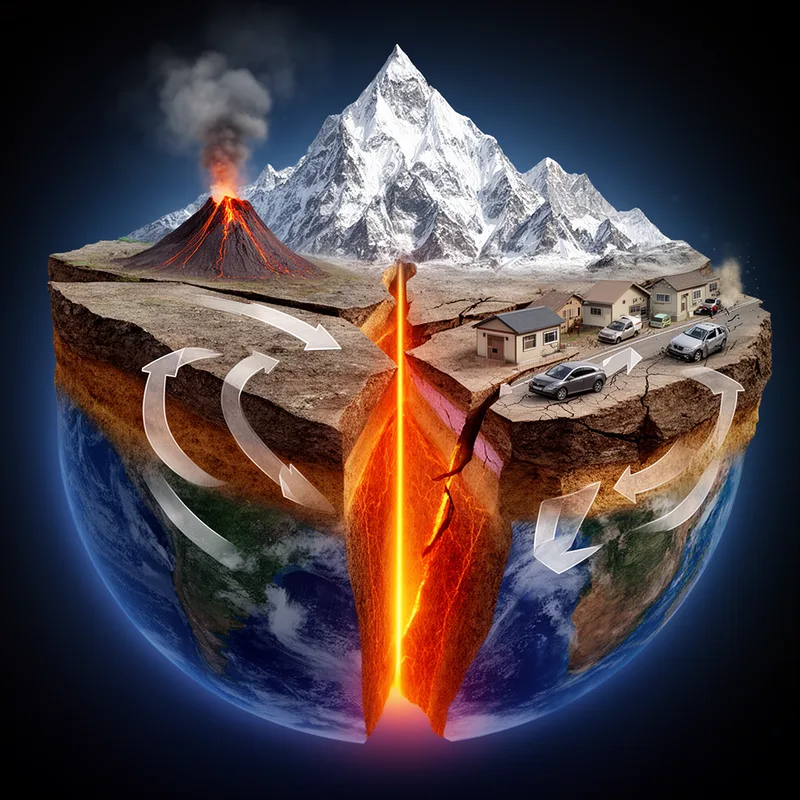
plate tectonic theory
- noun
- /pleɪt tɛkˈtɒnɪk ˈθɪəri/
- Specialized
- The plate tectonic theory revolutionized our understanding of Earth's geology.
Examples
-
Since its acceptance, plate tectonic theory has revolutionized our understanding of Earth's geological history.
-
The rise of the Himalayas is often attributed to the collision of two plates, as described in plate tectonic theory.
-
Many geologists accept the plate tectonic theory to explain the distribution of earthquakes and volcanoes around the world.
-
Many scientists support the plate tectonic theory due to its extensive evidence.
-
The discovery of new geological features provided strong evidence for the validity of plate tectonic theory in explaining earthquakes.
-
Scientists at the conference discussed the implications of plate tectonic theory on our understanding of volcanic activity.
-
According to plate tectonic theory, the movement of tectonic plates causes the formation of mountains over millions of years.
Synonyms

 5
3.9
5
3.9

Theory that Earth's outer layer is split into large moving plates that cause earthquakes and mountains
Surface Forms
Morphology
The meaning is directly compositional: 'plate' + 'tectonic' + 'theory' yields a theory about tectonic (earth-crust-related) plates and their movements. Although it's scientific vocabulary, the relation between the constituents is literal and cross-linguistically transparent, so a B1 learner who knows the parts can infer the overall meaning.
Etymology
Plate tectonic theory comes from the image of the Earth's outer layer as large moving plates like puzzle pieces and the word tectonic, which means movement of the ground. When these plates 'move' and press or pull, they make earthquakes, volcanoes, and mountains, so the name helps 'explain' those events.