

to plash
- verb
- /plæʃ/
- Archaic
- It takes skill to properly plash a living fence that will last for decades.
Examples
-
She learned how to plash young willow branches while working in the countryside.
-
They plash the branches together to create a dense hedge.
-
Farmers used to plash the hedges to make them thicker and stronger.
-
Can you plash those branches effectively?
-
Farmers used to plash the hedges to make them thicker and stronger.
-
It takes skill to properly plash a living fence that will last for decades.
-
She learned how to plash young willow branches while working in the countryside.
Synonyms

 2
5.5
2
5.5

To braid hair, thread, or plants by crossing strands together


 1
9.9
1
9.9
To weave thin sticks together to make a fence or wall
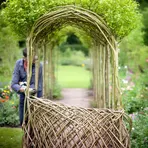
To weave young tree branches together to make a hedge or arch
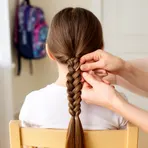
To braid hair, rope, or straw by weaving three strands together
How Interlaced

Surface Forms
Etymology
Plash in the sense of working hedges comes from an old word that meant 'to weave' and is like the word plait (to braid). So to plash a hedge is to partly cut and bend branches to 'weave' them into a strong barrier.