
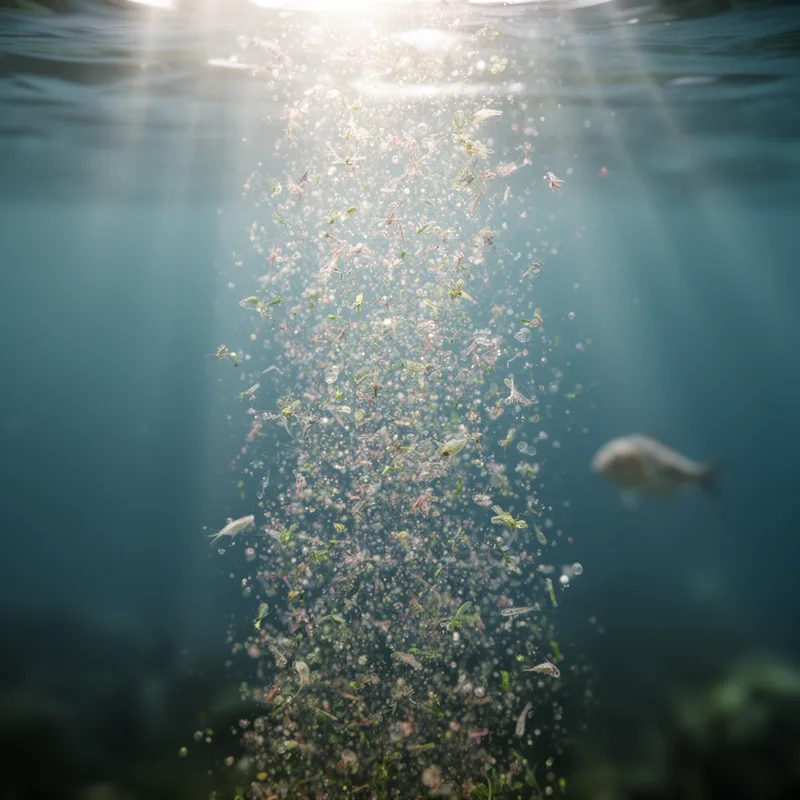
planktonic


 1
7.7
1
7.7
- adjective
- /plæŋkˈtɒnɪk/
- Specialized
- A second example concerns certain species of marine planktonic dinoflagellates that, in massive concentrations, sometimes produce "red tides" in coastal waters.
- planktonic organisms
- planktonic algae
- planktonic ecosystems
Examples
-
Abundance of polymer classes varies with planktonic species composition, terrestrial organic loading, and water column depth.
Academic text (2000) -
What are the effects of depth and tank radius on the dynamics of experimental planktonic ecosystems?
Academic text (2003) -
What is the geographic range of individual planktonic larvae?
Academic text (2009) -
Thus, we found that the consequences of changing water exchange rates on a planktonic community depend on the characteristics of incoming water.
Academic text (2003) -
Using a hand or towing net, he observed that the planktonic stages seemed to inhabit only the surface waters.
Academic text (1999) -
Organisms in biofilms are significantly less sensitive to antibiotics than the same organisms in their planktonic form.
Academic text (2002) -
During the first hours of a larva's planktonic existence, it is sustained by a small yolk sac.
Academic text (2002) -
Snapper larvae are thought to be planktonic and subject to advection by ocean current systems until they become benthic.
Academic text (1993) -
But many of the rocky habitat organisms have larval stages that are planktonic and may be transported among the rocky habitat patches.
Academic text (2009) -
The tiny fish feed on planktonic organisms that drift through the ocean currents.
Compounds
- Specialized
Tiny algae made of one cell that float freely in water and feed small water animals
Surface Forms
Morphology
Etymology
Planktonic comes from plankton, which comes from the Greek planktos meaning 'drifting' or 'wandering', and the ending -ic means 'related to'. So planktonic describes tiny living things that float or 'drift' in water.