

to plank over
- phrasal verb
- Workers began to plank over the muddy pathway to create a temporary sidewalk.
Examples
-
The old well was planked over to prevent accidents.
-
After the flood, they had to plank over the damaged bridge for safe passage.
-
They planked over the old floorboards.
-
Don't forget to plank over the damaged areas!
-
The construction team will plank over the damaged section of the deck for safety.
-
To make the garden accessible, they decided to plank over the uneven ground.
-
He plans to plank over the rotting boards on the porch before the winter.
Synonyms
 26
3.8
26
3.8

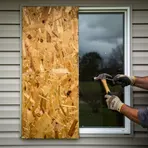
Cover windows or doors with pieces of wood to protect them
 17
3.6
17
3.6
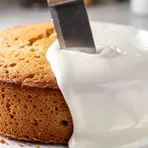
Form a layer across a surface, like fog or icing
 11
4.2
11
4.2
To cover something with a layer of material
 2
6.0
2
6.0
To cover a path or floor with long flat boards
 1
4.1
1
4.1
A surface or structure made of wooden boards
 1
7.7
1
7.7
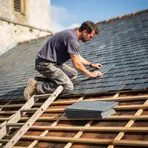
To cover a roof with thin flat stone tiles


 1
7.5
1
7.5
To cover the outside of a building with long thin overlapping wooden boards
How Covered

Surface Forms
Morphology
The meaning 'to cover a surface with planks' is directly and compositionally derived from the noun/verb 'plank' (piece of timber) combined with the spatial/covering sense of 'over'. The verb+preposition pattern indicating placing something over a surface is a common, cross-linguistic composition, so a B1 learner who knows both constituents would readily infer this meaning.
Etymology
The verb plank over comes from the simple picture of laying wooden boards across a hole, gap, or wet ground. When you put a plank over something to make a safe path, it came to mean 'to cover (a surface) with planks of wood'.