
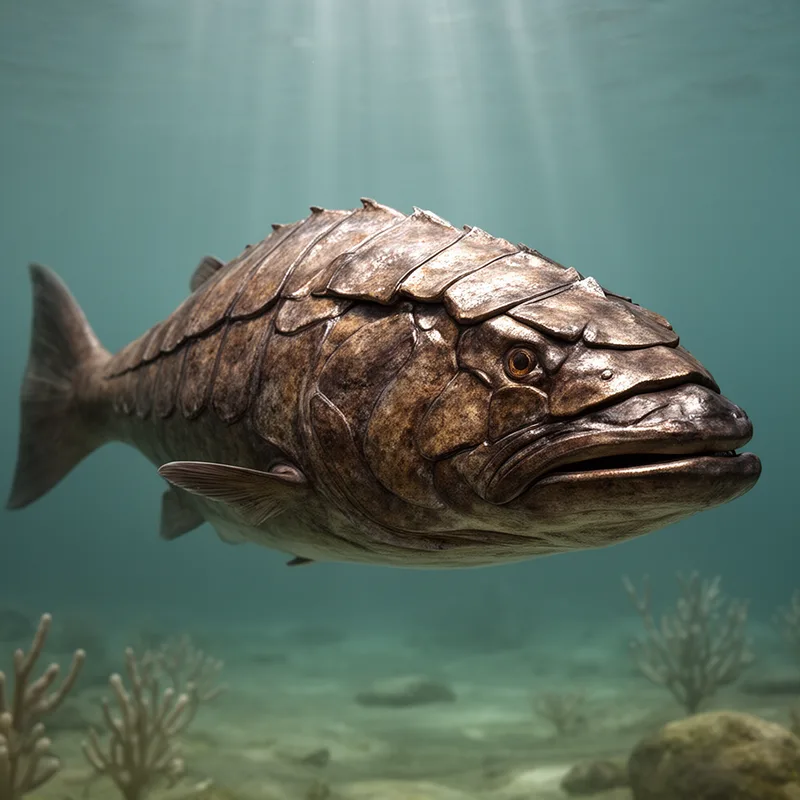
placoderm
- noun
- /ˈplækəˌdɜrm/
- Specialized
- Placoderms were prehistoric fish known for their armored bodies, dominating the seas during the Devonian period.
Examples
-
Many scientists study placoderms to understand prehistoric life.
-
The placoderm was a dominant fish during the Devonian period.
-
Fossils of placoderms provide crucial insight into the evolution of fish.
-
Many placoderm species thrived before going extinct by the end of the Devonian period.
-
The placoderm was among the earliest vertebrates to develop jaws.
-
Many fossils of placoderms reveal their unique bony plates protecting their heads and upper bodies.
-
Researchers discovered that placoderms had strong jaws and were among the first jawed fish in ancient oceans.
Synonyms
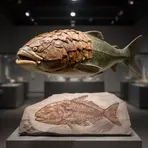
An extinct group of early fish with bony plates and simple jaws
Surface Forms
Morphology
placoderm = placo + derm
The elements are Greek combining forms ('placo-' = plate/flat, '-derm' = skin) that are not productive or recognizable to an average B1 learner, so the meaning cannot be reliably derived from familiar English base words.
Etymology
Placoderm comes from Greek parts placo- meaning 'plate' and -derm meaning 'skin'. These fish had hard bony plates on their head and upper body, so the name 'plate-skin' helps you remember they were armored, prehistoric fish.

