
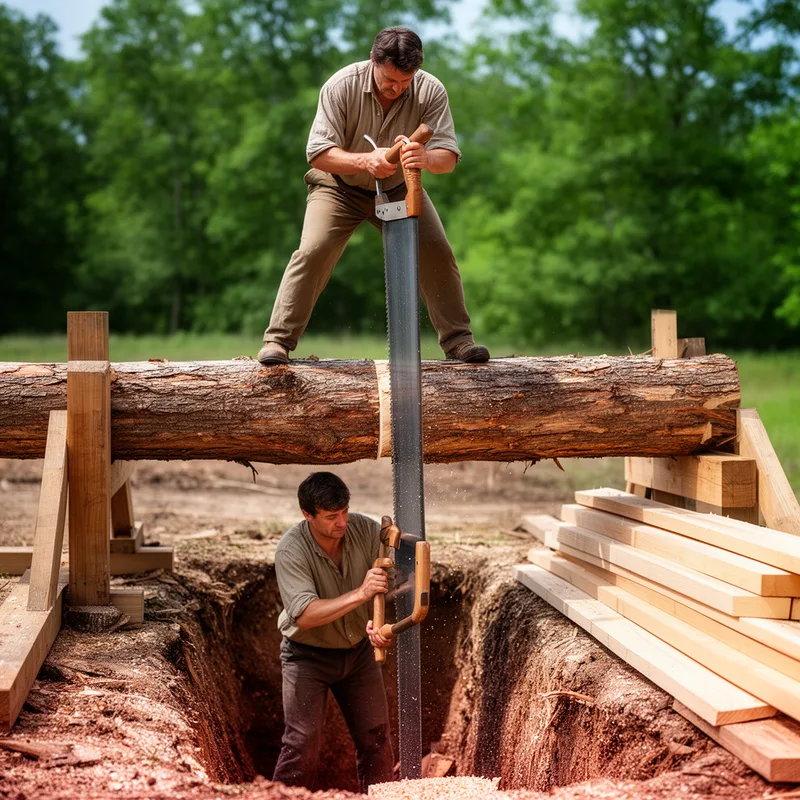
pitsaw
- noun
- /ˈpɪtˌsɔ/
- Archaic
- Before modern machinery, planks were often made by hand with a pitsaw.
Examples
-
Operating a pitsaw required great strength and coordination from both men involved.
-
The old lumber mill still displays a massive pitsaw used by workers a century ago.
-
The pitsaw is very sharp.
-
The carpenter used a pitsaw to cut the logs.
-
Before modern machinery, planks were often made by hand with a pitsaw.
-
The old lumber mill still displays a massive pitsaw used by workers a century ago.
-
Operating a pitsaw required great strength and coordination from both men involved.
Synonyms

 1
9.6
1
9.6

A long saw with handles at both ends used by two people


 1
9.1
1
9.1
A machine like a bandsaw that cuts thick wood into thinner boards
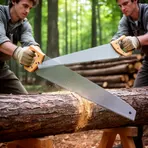
A large cutting tool with handles at both ends that two people use to cut wood
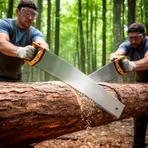
A large tool with handles at both ends used by two people to cut wood
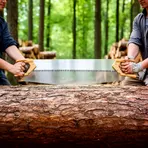
A long saw with handles at both ends used by two people to cut wood
Surface Forms
Morphology
Etymology
The word pitsaw is simply pit + saw, where pit means 'hole in the ground' and saw means 'to cut wood'. So a pitsaw is a large two-person saw used with one worker standing in a pit while the other saws above, which explains the name.