
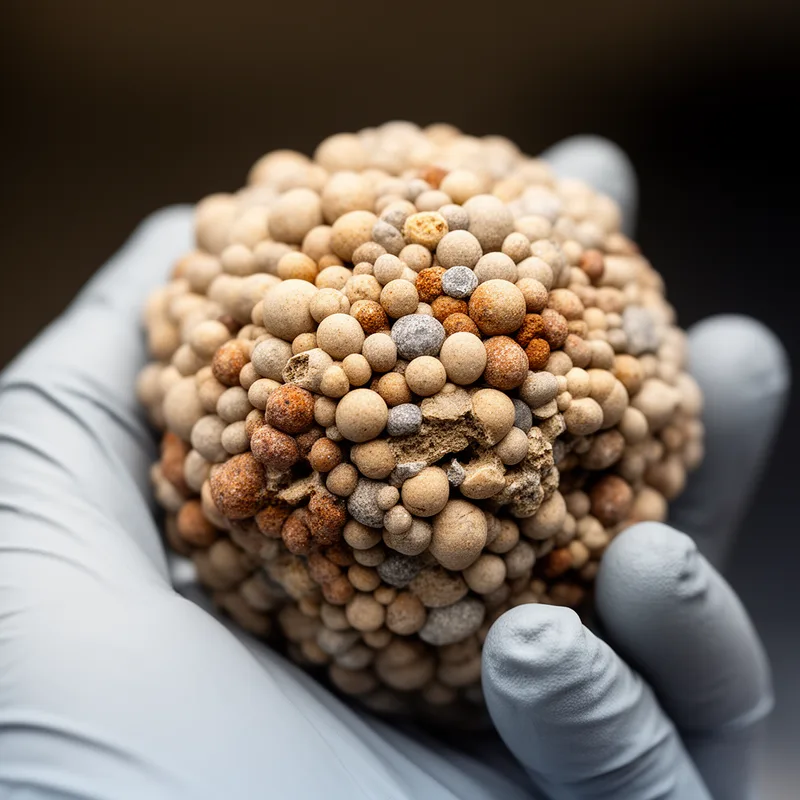
pisolite


 1
9.9
- noun
- /ˈpaɪsəˌlaɪt/
- Specialized
- The pisolite forms in warm, shallow marine environments.
Examples
-
The sample's texture and composition confirmed it was a pisolite.
-
The museum displayed a rare pisolite with perfectly rounded grains.
-
Geologists often study pisolite to understand ancient sedimentary environments.
-
Many pisolites contain calcium carbonate as a major component.
-
The geologist discovered a large piece of pisolite while examining the sediment layers at the site.
-
During the field trip, the students collected samples of pisolite from the rocky outcrop along the riverbank.
-
The unique texture of pisolite makes it easy to distinguish from other sedimentary rocks.
Synonyms
 ∞
1.0
Hard natural stone that you find on the ground or underground
 3
3.5
Rock made from layers of sand, mud, or broken shells
 1
9.9
A rock made of many small round grains of calcium carbonate
Surface Forms
Morphology
pisolite = pisolith (opaque) = piso + lith + ite
The elements are learned combining forms from classical languages used in technical mineral names and are not recognizable to an average B1 learner.
Etymology
The word pisolite comes from words meaning 'pea' and 'stone' — Latin pisum 'pea' and Greek lithos 'stone'. So a pisolite is a rock made of many small, round pieces that look like peas.