
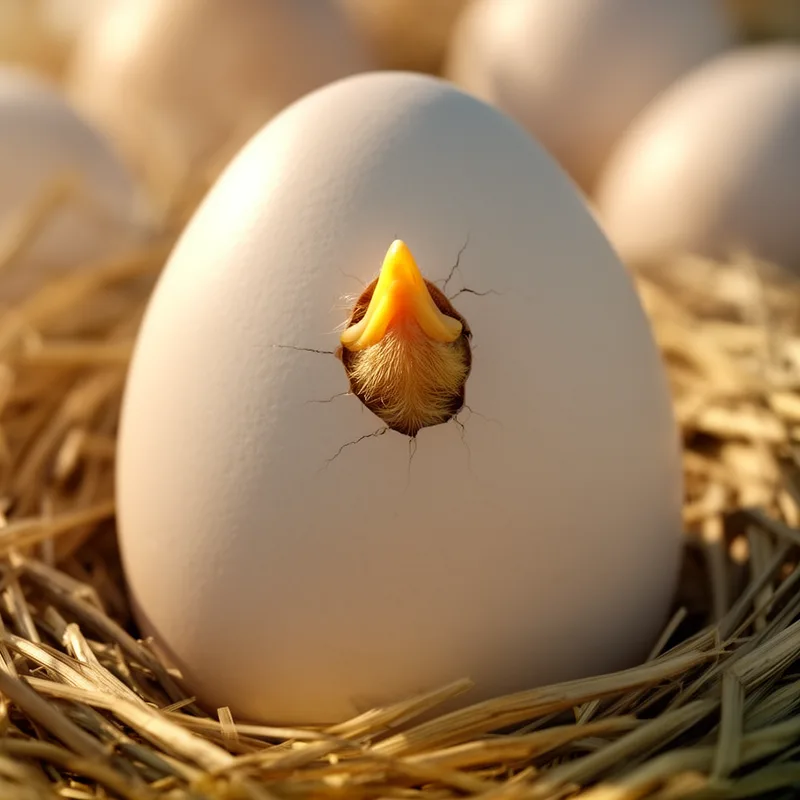
to pip
9.3
To make a small hole in an eggshell when a young bird begins to come out
- verb
- /pɪp/
:
romper el cascarón
- After several hours, the duckling finally managed to pip and take its first breath of air.
Examples
-
The tiny chick began to pip early in the morning, making a small hole in the shell.
-
Farmers watched as each egg started to pip one by one during the spring hatching season.
-
The chick pipped the egg this morning.
-
Did the bird pip yet?
-
The tiny chick began to pip early in the morning, making a small hole in the shell.
-
After several hours, the duckling finally managed to pip and take its first breath of air.
-
Farmers watched as each egg started to pip one by one during the spring hatching season.
Synonyms
hatch
vsto pip
 199
1.9
199
1.9

The time when young animals come out of eggs
is the single act of breaking the eggshell at the start of emergence
Idioms


Phrasal Verbs

Compounds


How Cracked
to emerge
249
3.5
249
3.5

to pip
9.3
Surface Forms
Etymology
Pip The verb pip for a chick breaking its egg shell comes from the tiny hole or the little 'peep' sound a chick makes when it starts to get out, so to 'pip' is to make that first small opening in the shell.