
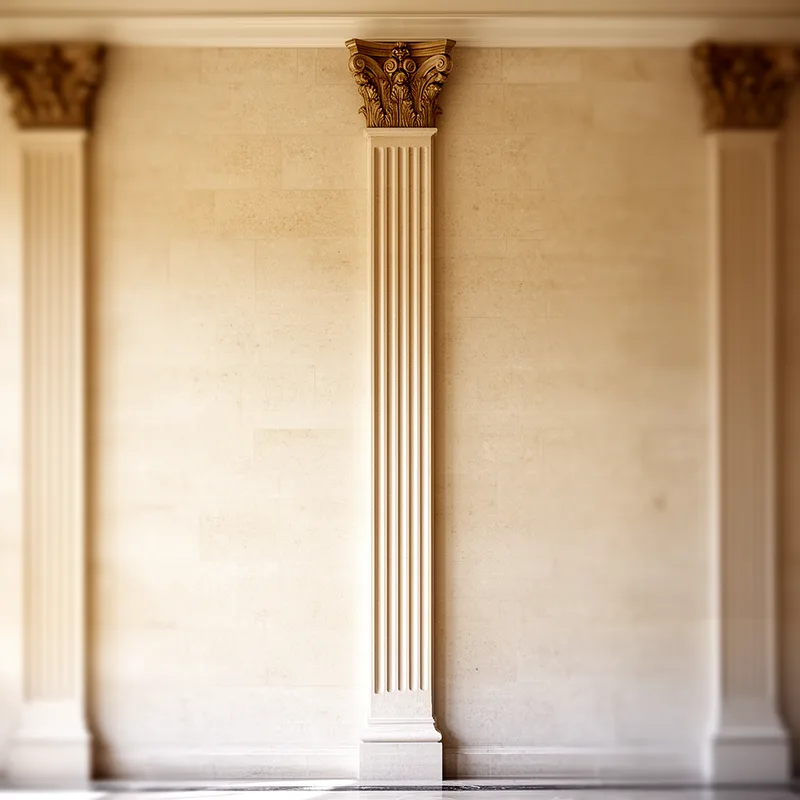
pilaster
 1
9.3
1
9.3

- noun
- /ˈpɪlæstər/
- Specialized
- There's a wrought-iron fence out front with brick pilasters and a circular drive.
- Corinthian pilasters
- classical pilasters
- corner pilaster
Examples
-
Like the framing, defining corner piers, the pilasters dividing the window groups extend from the base to the entablature.
Academic text (1990) -
A design already existed on another of the City's tanks, but that structure did not feature pilasters.
Academic text (2000) -
The Italian impression depends only on the use of classical pilasters instead of Gothic.
Academic text (1998) -
On the rear wall is a kind of private chapel, a wall niche framed by pilasters and faced with spandrels.
Academic text (2005) -
The existence of 12 exterior pilasters would interfere with the layout of the original design, making the logos less visible.
Academic text (2000) -
Lining the nave were twenty Corinthian pilasters supported on travertine bases.
Academic text (1994) -
Thirteen floors of stone with sharp cornices, false architraves, and fluted pilasters.
Fiction book (2001) -
The grand entrance was adorned with pilasters that added elegance to the building's facade.
-
The architect chose to incorporate pilasters to enhance the structural integrity of the walls.
-
In the old library, ornate pilasters framed the entrance, showcasing classical architectural design.
How Sculptural

Surface Forms
Etymology
The word pilaster comes from the Italian word pilastro, which means 'pillar'. A helpful image is a 'pillar' pressed flat against a wall, which explains why a pilaster looks like a thin, rectangular column attached to a building.