
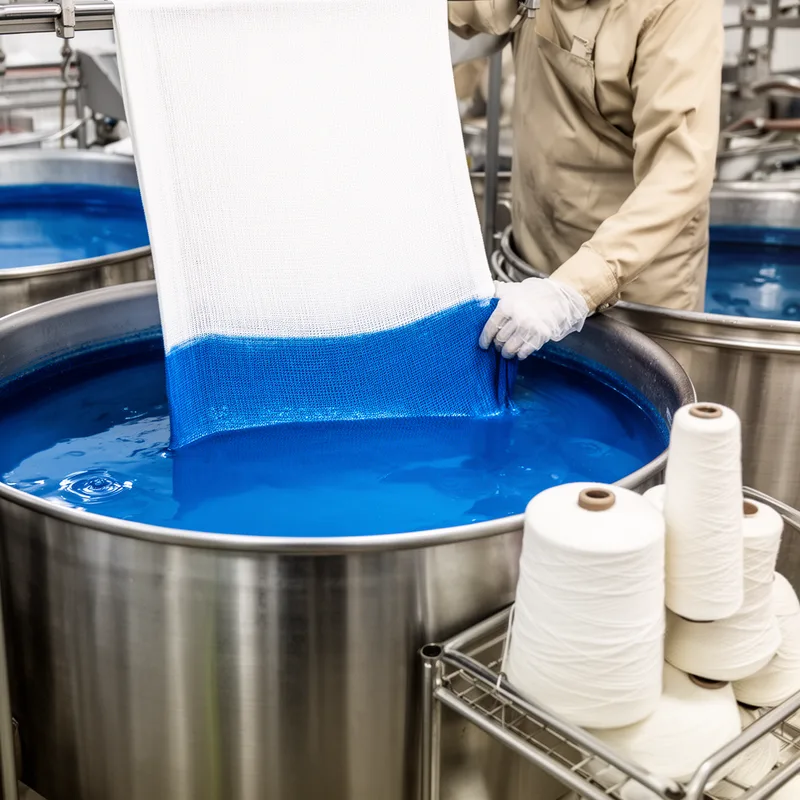
to piece-dye
- verb
- Specialized
- The manufacturer decided to piece-dye the cotton fabric to match the season’s color trends.
Examples
-
Many fashion companies prefer to piece-dye so they can respond quickly to changing color demands.
-
It's often cheaper to piece-dye garments than to dye the yarns individually.
-
The artist piece-dyed the fabric to create unique patterns.
-
We can piece-dye this fabric for the fashion show.
-
Many fashion companies prefer to piece-dye their fabrics to keep up with the latest trends.
-
The designer chose to piece-dye the silk after weaving to achieve a more vibrant look.
-
It is common in the industry to piece-dye instead of dyeing the yarns beforehand to save time.
Surface Forms
Morphology
Etymology
Piece-dye is made of piece and dye, where piece means a finished 'length of cloth' and dye means 'to add color'. So, to piece-dye is to color the whole fabric after it is woven, rather than coloring the threads first.

