
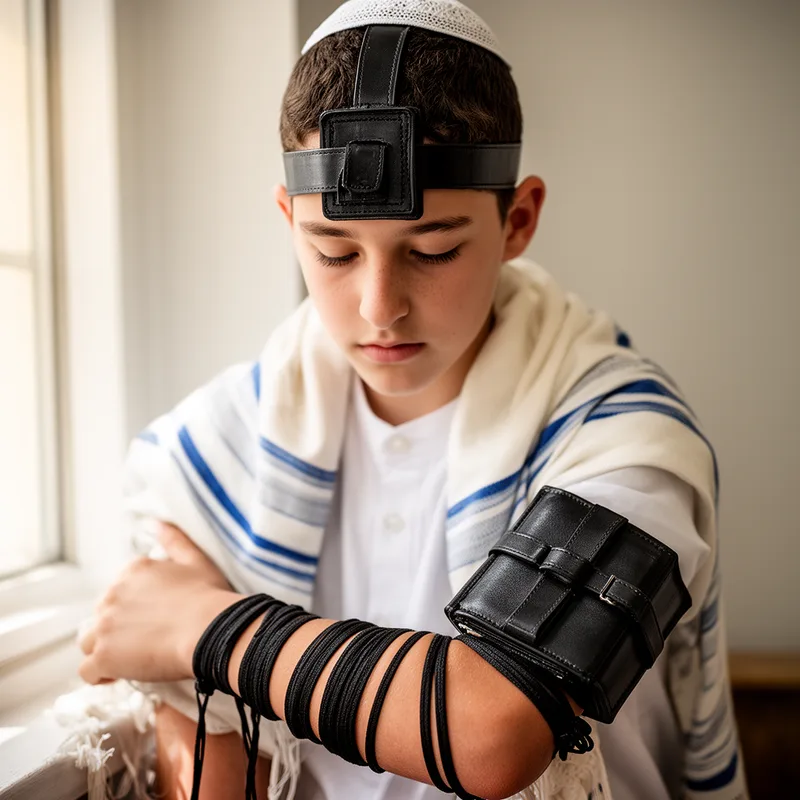
phylactery
 1
9.9

- noun
- /fɪˈlæk.tə.ri/
- I'd paid a condolence call that morning, prayed with the rabbi and the other mourners, and now, as I drove along Interstate 95, I could see the marks along my arm, the imprint from the phylacteries I'd put on that morning.
- prayer shawl and phylacteries
- wear a phylactery
Examples
-
Prayers were held in the social hall every morning, and the older boys, who'd been bar mitzvahed, wrapped the phylacteries around their arms as my father did.
Fiction book (1993) -
Nevertheless, he enfolded himself in it, then rolled up his sleeve, wound the first phylactery around his left arm, and placed the second on his forehead.
Fiction book (1998) -
Jews in prayer shawls and phylacteries were either standing in place or walking about.
Fiction book (1998) -
Yes, you put on the prayer shawl first, before the phylacteries.
Fiction book (1998) -
My father was wrapped in his prayer shawl, his left arm and forehead bound in phylacteries.
Fiction book (1991) -
A little old man with a gray, close-cropped head and the face of a butcher touched the ritual fringes of his shawl to the phylactery on his head and kissed them.
Fiction book (1998) -
Before breakfast, I'd watch my father wrap the phylacteries around his arm, over and under his fingers, spelling out God's name; afterward, over cereal, I'd watch him again, resting his left arm on the kitchen counter, the mark of the leather straps still imprinted on his skin.
Fiction book (1993) -
During morning prayers, Jewish men traditionally wear phylacteries on their forehead and left arm.
-
He carefully placed the phylacteries on his forehead and left arm before beginning his prayers.
-
The rabbi explained the significance of wearing phylacteries as a way to fulfill the commandments.
Synonyms
 1
9.9
Two small black leather boxes with prayer scrolls worn by Jewish men during weekday morning prayers
Surface Forms
Etymology
Phylactery comes from the Greek phylakterion, meaning 'safeguard', and from phylassein 'to guard'. These small leather boxes hold sacred words and are worn during morning prayers, so the name shows they are meant to 'protect' the wearer. The same root appears in prophylactic, which means 'keeping safe'.