
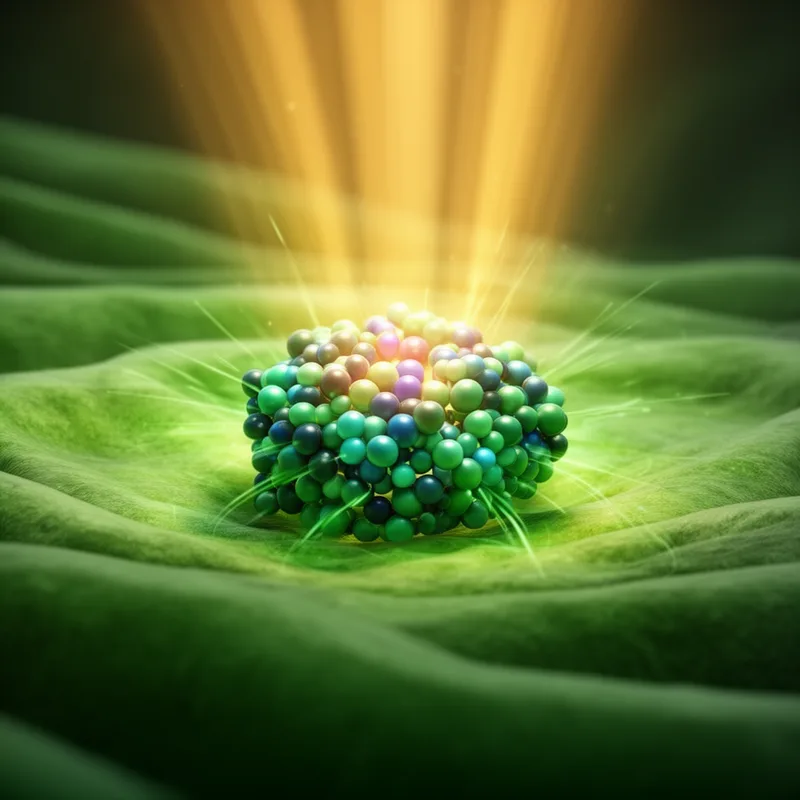
photosystem


 1
6.7
- noun
- /ˈfoʊtəˌsɪstəm/
- Specialized
- In fact, we know evolution did this because green sulfur bacteria only have one photosystem, and they eat iron as their nutrient.
- photosystem II
- photosystem II (PSII)
- separation of photosystems
Examples
-
You can lead a class discussion on electron bounce, the role and composition of photosystems 1 and 2, and the porphyrin cyclic structures of various chlorophyll molecules involved in the light reaction.
Academic text (2002) -
This is this part is called Photosystem two.
-
And it turns out that this middle part photosystem one, works with cytochrome BF in a way that allows it to balance that.
-
In the absence of the lmw hsps, photosystem II experienced heat damage and electron transport levels declined.
Academic text (2000) -
One basic process for photosynthetic organisms that lends itself to analysis in this phylogenetic context is energy sharing among photosystems I and II.
Academic text (2008) -
The subsequent addition of purified hsp rapidly restored photosynthetic activity, demonstrating that these heat shock proteins protect the electron transport chain from damage and may contribute to the repair of damaged photosystem proteins.
Academic text (2000) -
For example, Heckathorn et al. (1998) studied isolated chloroplasts with and without the presence of heat shock proteins (hsps) to elucidate the proteins' role in protecting the photosystem from heat stress (see box page 984).
Academic text (2000) -
The light energy captured by the photosystem initiates the process of photosynthesis in plants.
-
In plants, the photosystem converts light energy into chemical energy during photosynthesis.
-
Each photosystem plays a vital role in harvesting light to support the overall process of photosynthesis.
Surface Forms
Morphology
Etymology
Photosystem joins photo- ('light') and system ('a set of parts'), and you can see photo- in photograph meaning 'light'. So a photosystem is a set of parts in plants and algae that captures light to start photosynthesis.