
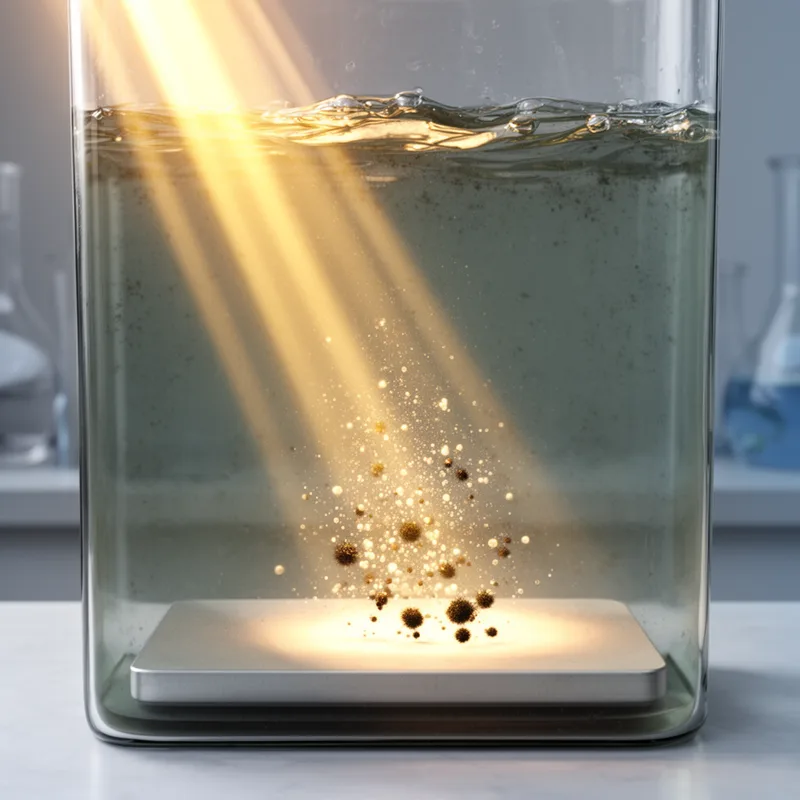
photocatalysis


 1
8.8
- noun
- /ˌfoʊtoʊkəˈtælɪsɪs/
- Specialized
- Did you know that photocatalysis can purify air and water?
Examples
-
The process of photocatalysis can help create cleaner energy sources.
-
Scientists use photocatalysis to break down pollutants in water using sunlight.
-
Recent advances in photocatalysis have improved the efficiency of solar-powered chemical reactions.
-
The process of photocatalysis is essential for breaking down pollutants.
-
The team is developing new materials to enhance photocatalysis for environmental applications.
-
Using sunlight to promote photocatalysis, scientists can break down harmful pollutants in water.
-
The efficiency of photocatalysis can significantly reduce energy costs in chemical manufacturing.
Surface Forms
Morphology
Etymology
The word photocatalysis comes from photo- meaning 'light', as in photograph, and catalysis from catalyst, meaning 'something that makes a chemical reaction go faster'. So, photocatalysis is when light helps a catalyst speed up a chemical reaction, which is why sunlight can help break down pollutants.