
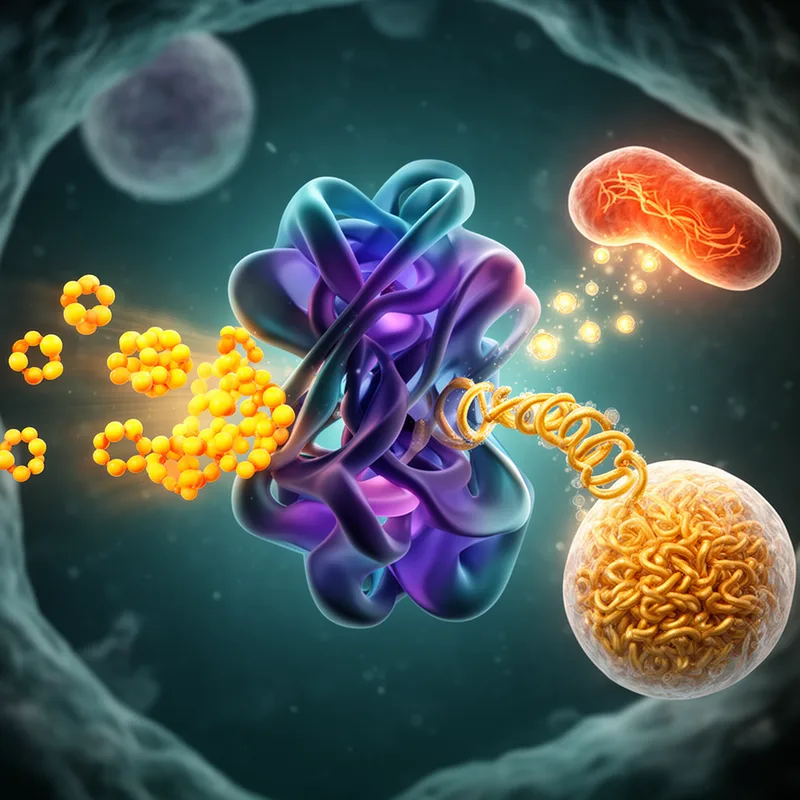
phosphoglucomutase
- noun
- /ˌfɑsfoʊˌɡluːkoʊˈmjuːteɪs/
- Specialized
- The enzyme phosphoglucomutase plays a crucial role in converting glucose-1-phosphate to glucose-6-phosphate during carbohydrate metabolism.
Examples
-
In addition, a specific variant of the enzyme phosphoglucomutase occurs with a frequency of only about 21 percent among both the Ashkenazim and Eastern European Gentiles, but at a higher frequency of 26 to 32 percent among both Mediterranean Jews and Gentiles.
Academic text (1993) -
In humans, phosphoglucomutase is essential for proper glucose metabolism and is involved in the regulation of glycogen storage.
-
Researchers studied how phosphoglucomutase affects energy production in cells by facilitating the conversion of glucose-1-phosphate.
Surface Forms
Morphology
phosphoglucomutase = mutase (opaque) = phospho + gluco + mut + ase
The word is a specialized biochemical name formed from technical combining forms and the enzyme suffix '-ase', so its meaning is not guessable by an average B1 learner from the parts.
Etymology
Phosphoglucomutase breaks into parts: phospho- meaning 'phosphate', gluco- meaning 'sugar' as in glucose, and -mutase meaning 'to change', like 'mutate'. So it is an enzyme that 'changes' the position of a phosphate on a sugar, which is why it turns glucose-1-phosphate into glucose-6-phosphate.

