
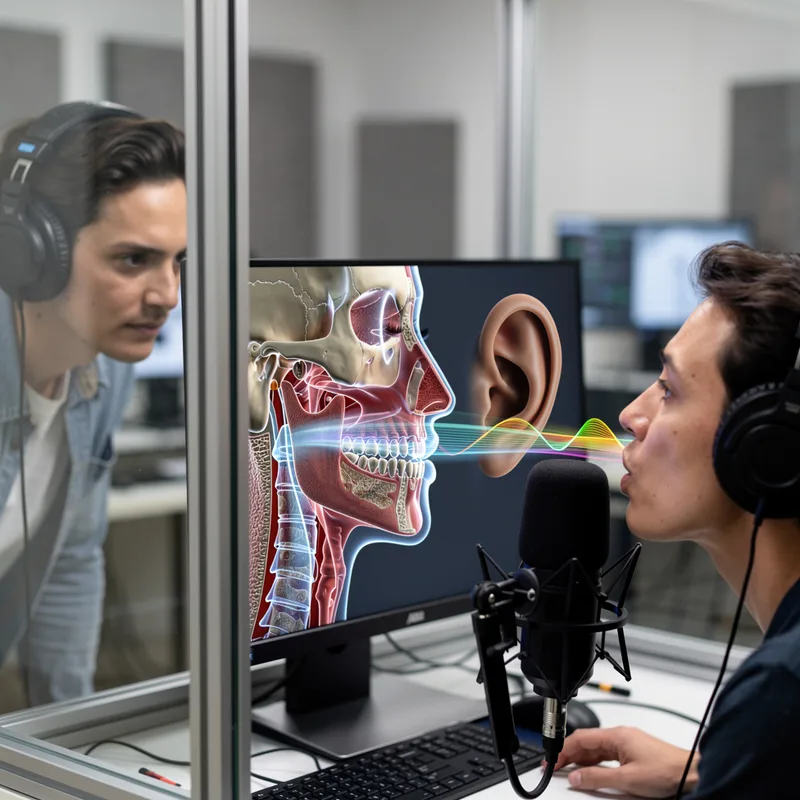
phonetics
 2
4.8

- noun
- /fəˈnɛtɪks/
- Specialized
- The cutting-edge program emphasizes phonetics, visual, auditory, and kinesthetic learning.
- phonetics and linguistics
- phonetics and phonology
- Department of Phonetics
Examples
-
Understanding phonetics can significantly aid in mastering the pronunciation of foreign words.
-
At 4.5 years, John demonstrated his curiosity about sounds in his interest in phonetics, specifically the initial sounds in words, in a set of drawings.
Academic text (2003) -
So basically you have these three parts from a basic string to phonetics, to throat postures until finally you get the actual speech output.
-
Your grasp of phonetics and the way you've adapted your grammar-- it's quite remarkable, really.
-
Current reading assessments put emphasis on the five components of reading competency, which include fluency, grasp of phonetics, comprehension abilities, phonemic awareness, and vocabulary.
Academic text (2015) -
In her linguistics course, students study phonetics to understand how different sounds are produced and perceived.
-
The speech therapist focuses on phonetics to help children improve their pronunciation.
Surface Forms
Morphology
Etymology
Phonetics comes from the Greek root phon- meaning 'voice' or 'sound' and the ending -ics meaning 'study of'. The same root is in everyday words like phone and microphone, which are about sound, so phonetics is the study of speech sounds.