
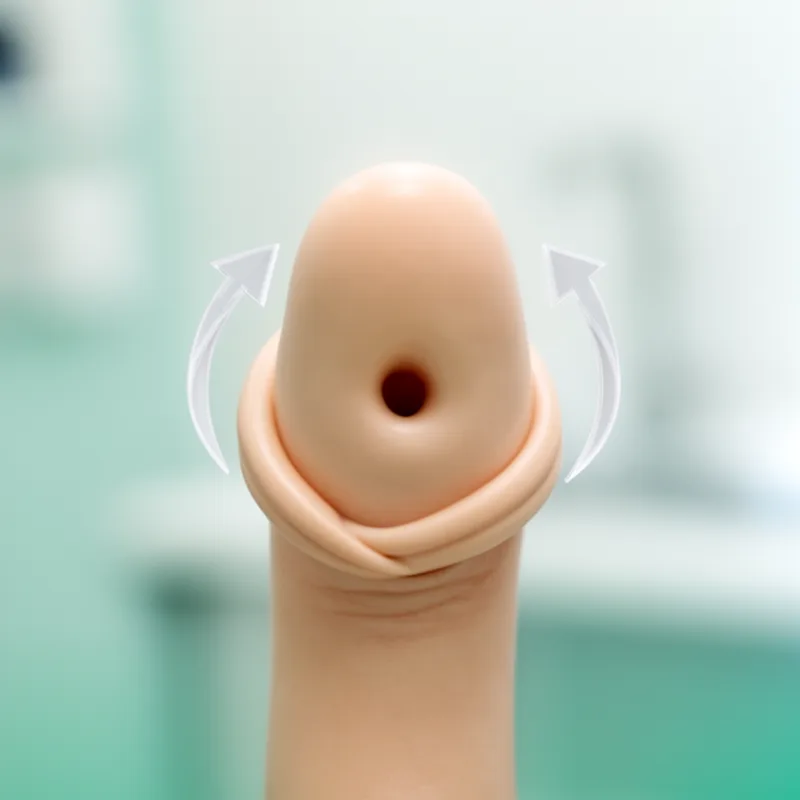
phimosis


 1
9.9
- noun
- /fɪˈmoʊsɪs/
- Specialized
- What Sayre did was to train physicians to look for genital irritation or phimosis when they were confronted by confusing, seemingly unrelated symptoms.
- called phimosis
Examples
-
The doctor diagnosed him with phimosis, explaining that it occurs when the foreskin is too tight to be retracted.
-
As doctors identified a growing list of maladies as results of "phimosis and adherent prepuce," they drifted into a pattern of using these terms expansively.
Academic text (1994) -
Cases of phimosis severe enough to require surgery were uncommon, though, and down through the ages, it was considered a rare affliction.
Academic text (1994) -
In the 1840s, many worried about phimosis, a condition in which the foreskin does not retract completely.
Blog text (22) -
The rationale for surgery to remove diseased tissue or to relieve acute inflammation caused by phimosis was self-evident.
Academic text (1994) -
Parents should be aware that phimosis can often be treated effectively with proper medical guidance.
-
After consulting a urologist, he learned that he had phimosis, which was the cause of his discomfort.
How Tight
- Specialized
1
9.9

- Specialized
1
9.9
Surface Forms
Morphology
phimosis = phim + osis
Formed from a Greek medical combining form plus the disease suffix '-osis'; the components are not productive or meaningful to an average B1 learner, so the meaning is not derivable from familiar English parts.
Etymology
Phimosis comes from the Greek root phimos meaning 'muzzle' and the ending -osis meaning 'condition'. So, imagine a 'muzzle' that keeps something closed, which explains why phimosis means the foreskin is too tight to be pulled back.