
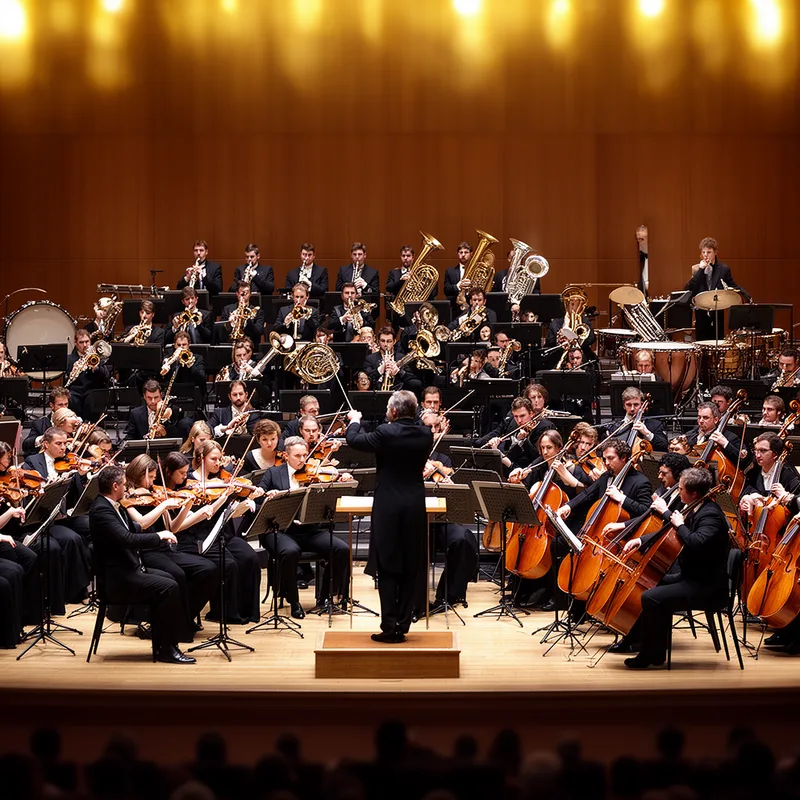
philharmonic
- adjective
- /ˌfɪl.əˈmɔːr.nɪk/
- She joined the philharmonic orchestra shortly after graduating from music school.
Examples
-
The philharmonic orchestra performed beautifully last night.
-
Many philharmonic musicians participated in the recording of the new symphony.
-
The city's philharmonic association performed a series of concerts this season.
-
She enjoys attending philharmonic concerts whenever she can.
-
The city's philharmonic orchestra played an enchanting symphony for the audience.
-
Many talented philharmonic musicians collaborated on this innovative musical project.
-
Attending a philharmonic concert is a wonderful experience for anyone who loves classical music.
Synonyms
 18
5.3
18
5.3

Relating to music written to be played by a large group of instruments like strings and brass
 8
6.5
8
6.5
Having a rich, organized sound like a full orchestra
Compounds

- Specialized
A standard musical note used to tune instruments, usually the A above middle C at 440 hertz
Surface Forms
Morphology
philharmonic = harmonic (semi-transparent) = phil + harmonic
Built from the learned combining form 'phil-' (loving) + 'harmonic'; the parts suggest 'loving harmony/orchestral music', but 'phil-' is a learned form not fully familiar to all B1 learners and the orchestra-related meaning is conventional.
Etymology
Philharmonic comes from the Greek parts philo- meaning 'love' and harmonic meaning 'harmony' or 'sound'. So philharmonic as an adjective often describes something connected to a symphony orchestra or its members, because the word points to a love of harmonious music.