
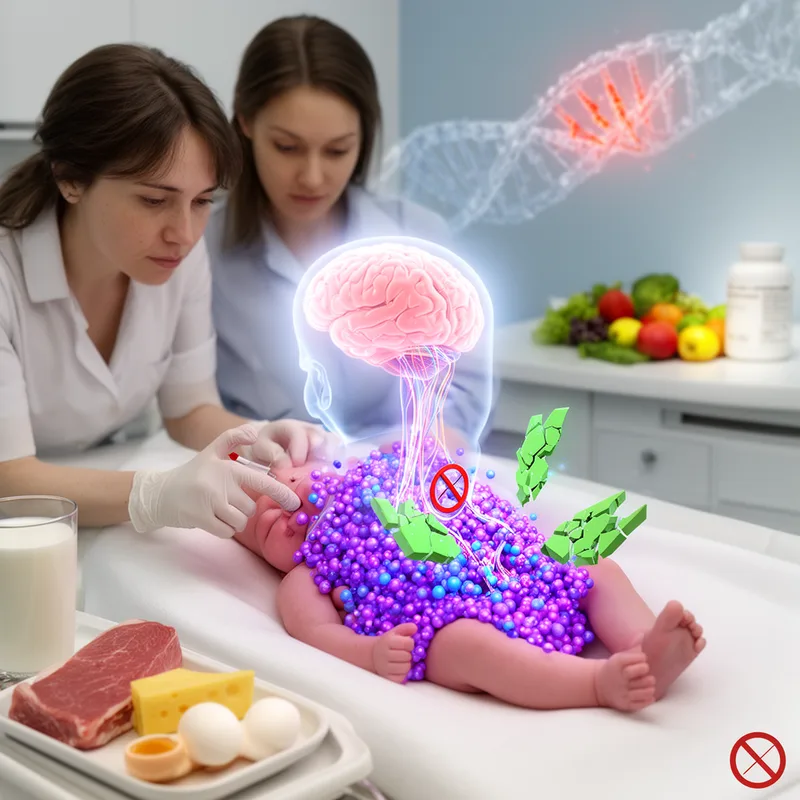
phenylketonuria


 1
9.9
- noun
- /ˌfɛnɪlˌkiːtoʊˈnjʊəriə/
- Specialized
- Doctors recommend regular screening for phenylketonuria in newborns to ensure early intervention and treatment.
- dietary management of phenylketonuria
- control of phenylketonuria
Examples
-
Some products (Children's Tylenol chewable tablets) contain aspartame; avoid in patients with phenylketonuria.
Academic text (2007) -
A person with phenylketonuria should be cautious about consuming foods containing high levels of phenylalanine, such as protein-rich items.
-
How practical are recommendations for dietary control in phenylketonuria?
Academic text (2002) -
Indeed, during the period audited, 43% of our total adult phenylketonuria population were following an unrestricted diet.
Academic text (2002) -
For example, babies with phenylketonuria (PKU) cannot process phenylalanine well.
Blog text (29) -
We wholeheartedly agree with the authors that more acceptable modes of treatment will need to become available to improve metabolic control in adults with phenylketonuria.
Academic text (2002) -
In the USA, a recent National Institutes of Health consensus statement recommended phenylalanine restriction across the lifespan of an individual with phenylketonuria.
Academic text (2002) -
One example is the inherited metabolic disorder called phenylketonuria (pronounced as fen-ul-kee-ta-new-re-a) or PKU.
Academic text (2010) -
Individuals diagnosed with phenylketonuria must follow a strict diet low in phenylalanine to prevent serious health issues.
Synonyms
 1
7.7
A genetic condition where the body cannot break down the amino acid phenylalanine, harming the brain if not treated
Surface Forms
Morphology
Etymology
Phenylketonuria breaks into phenyl, from the amino acid phenylalanine, keto meaning 'ketone' (a type of chemical), and -uria meaning 'urine'. So it names a condition where phenyl-related chemicals appear in the urine because the body cannot break down that amino acid.