
phenological


 1
8.6
- adjective
- /ˌfɛnəˈlɒdʒɪkəl/
- Specialized
- How about you? Do you trust in any phenological associations?
- phenological synchrony
- phenological period
- phenological models
Examples
-
Likewise, researchers can test phenological reactions of populations to climate change (Parmesan 2007).
Academic text (2011) -
A closer examination of soil temperature data, coupled with detailed phenological studies, provides a new perspective on changes in spring asynchrony.
Academic text (2012) -
Insects that arrive on, within, or near their host plant have a considerable advantage because at least one suitable host is readily available, and there is a good chance of phenological synchrony between the colonist and its host.
Academic text (2010) -
During this phenological period, higher temperatures markedly increased the rate of leaf expansion and hence C uptake through photosynthesis (Figure 5b).
Academic text (2008) -
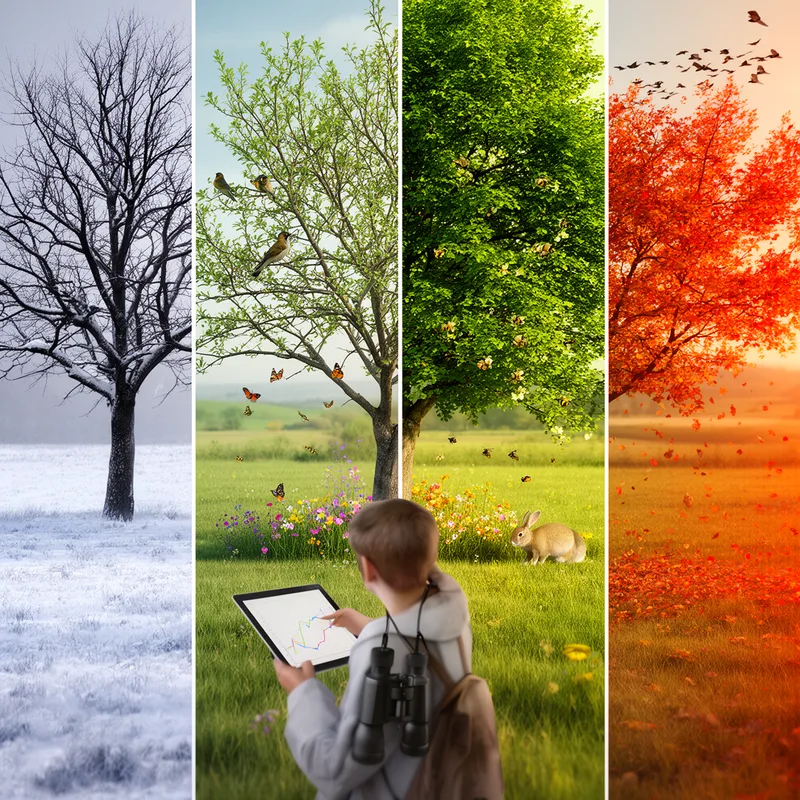
Scientists study the phenological changes in flowers to understand how climate affects blooming times.
-
She observed the phenological patterns of migratory birds to track seasonal changes in their behavior.
-
The biologist recorded phenological events, such as the first buds of spring, as indicators of climate change.
Surface Forms
Morphology
Etymology
Phenological comes from the Greek parts pheno- 'to appear' and -logy 'study', and the same pheno- is in phenomenon. So phenological means the study of natural things that 'appear' with the seasons, like when flowers bloom or birds migrate.