
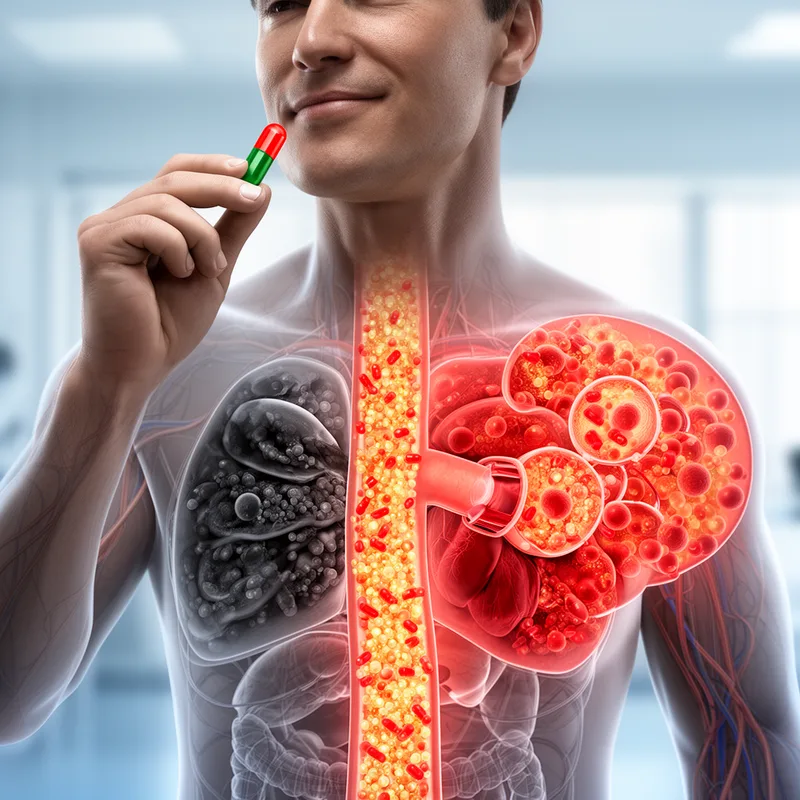
pharmacodynamic


 1
8.4
- adjective
- /ˌfɑːrməkəˈdaɪnæmɪk/
- Specialized
- So how do tiotropium's pharmacokinetic and pharmacodynamic characteristics translate into addressing these clinical goals?
- pharmacokinetic and pharmacodynamic
Examples
-
These drugs are synthetic broad-spectrum antibacterial agents whose pharmacodynamic processes inhibit topoisomerase IV and DNA gyrase.
Academic text (2007) -
Pharmacokinetic and pharmacodynamic properties of muscle relaxants vary greatly even in healthy individuals.
Academic text (2003) -
This finding is in accordance with those from pharmacodynamic studies that investigated the impact of prolonged exposure to nasal steroids on pituitary-adrenal function.
Academic text (1998) -
From a precision medicine perspective, biomarkers can be classified as prognostic, pharmacodynamic, or predictive biomarkers.
Academic text (2016) -
Pharmacodynamic interactions between medicines and smoking or smoking cessation are attributable to the effects of tobacco smoke, including nicotine.
Academic text (2014) -
In pharmacodynamics, understanding how a drug affects the body is crucial for effective treatment.
-
The pharmacodynamic properties of a medication can determine its effectiveness and safety in patients.
-
Researchers study pharmacodynamic interactions to assess how different drugs influence each other's effects on the body.
Synonyms
 5
7.2
Relating to medicines and how they affect the body
 2
7.1
Relating to how medicines act in the body
Surface Forms
Morphology
Etymology
The word pharmacodynamic breaks into two parts: pharmaco- meaning 'drug' as in pharmacy, and dynamic meaning 'power' or 'force'. So pharmacodynamic is about the 'power' a drug has and how it acts on the body.