
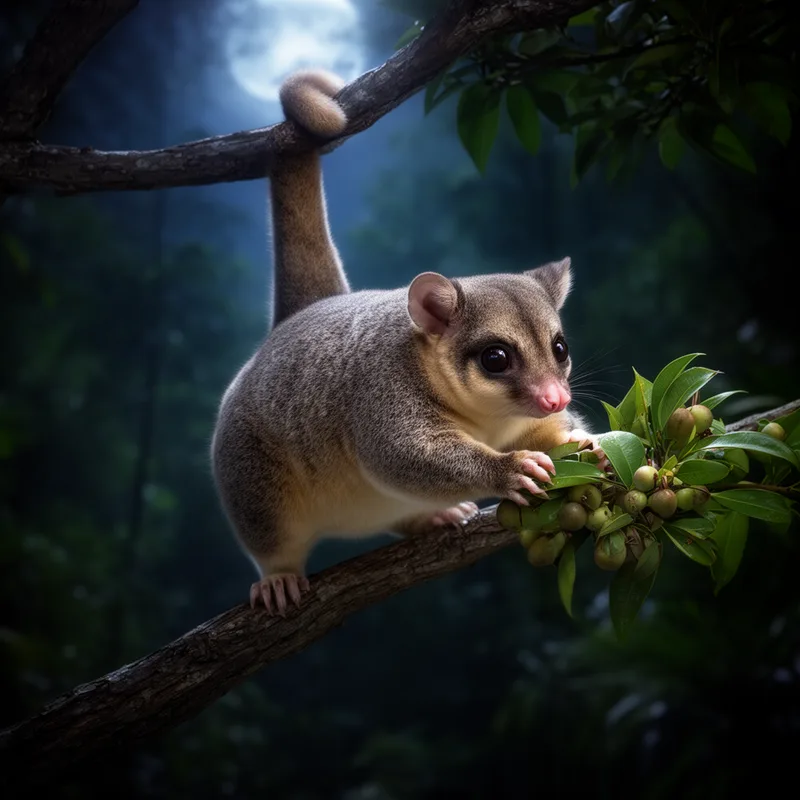
phalanger
- noun
- /ˈfæl.ən.dʒər/
- Australian
- The phalanger's long, prehensile tail helps it balance as it moves through the treetops.
Examples
-
In Australia, you might spot a phalanger resting on a branch during the day.
-
Such foods were referred to by the name of their quintessential form, the meat of the terrestrial phalanger or kuyamodu, which was only to be eaten by males who had undergone the appropriate initiation in which they received a helping from a senior man.
Academic text (2001) -
The phalanger is known for its unique ability to glide between trees in search of food.
Synonyms

 54
1.9
54
1.9

A small furry animal with a long tail that lives in trees and carries babies in a pouch
Compounds

- Australian
A small animal from Australia and New Guinea that lives in trees and has a pouch and a bushy tail
- Australian
A small Australian animal active at night that glides between trees using skin folds

- Specialized
A group of cuscuses, marsupial animals from Australia, New Guinea and nearby islands
Surface Forms
Etymology
Phalanger comes from an old scientific name with Greek roots and sounds like phalange 'finger'. A helpful way to remember it is to imagine the animal's long, grasping tail working like an extra 'finger' to hold branches, which is why the name fits this small, tree-living marsupial.