
peyotism
- noun
- /peɪoʊˌtɪzəm/
- NSFW
- Many aspects of nineteenth-century Osage religion were waning by 1910, replaced by peyotism.
Examples
-
In one instance, a family switched from peyotism to Christianity following the death of a son.
Academic text (1994) -
By the time the Sun Dance was abandoned, the Kiowas were being introduced to the Ghost Dance, a religious ceremony that attempted to keep Kiowa traditions alive, including late nineteenth-century beliefs about medicine bundles (Kracht 1989:818-820), peyotism, and dancing.
Academic text (1994) -
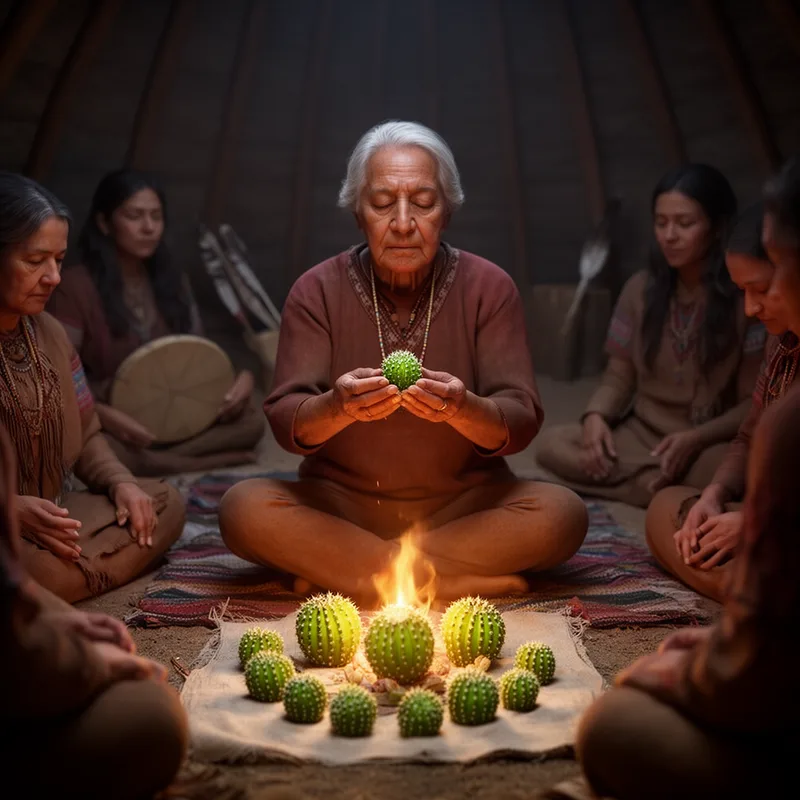
Many Native American groups practice peyotism as a sacred tradition during their spiritual ceremonies.
-
The revival of peyotism in modern Native American communities emphasizes the significance of the peyote cactus.
-
During the annual gathering, participants shared their experiences and beliefs related to peyotism.
Surface Forms
Morphology
Etymology
Peyotism comes from peyote, the name of a small sacred cactus, and the ending -ism, which means 'a belief or practice'. The name peyote comes from a Native American language word 'peyotl', so peyotism is the religious practice that uses the peyote cactus.

