
petrosal
- noun
- /ˈpɛtrəsəl/
- Specialized
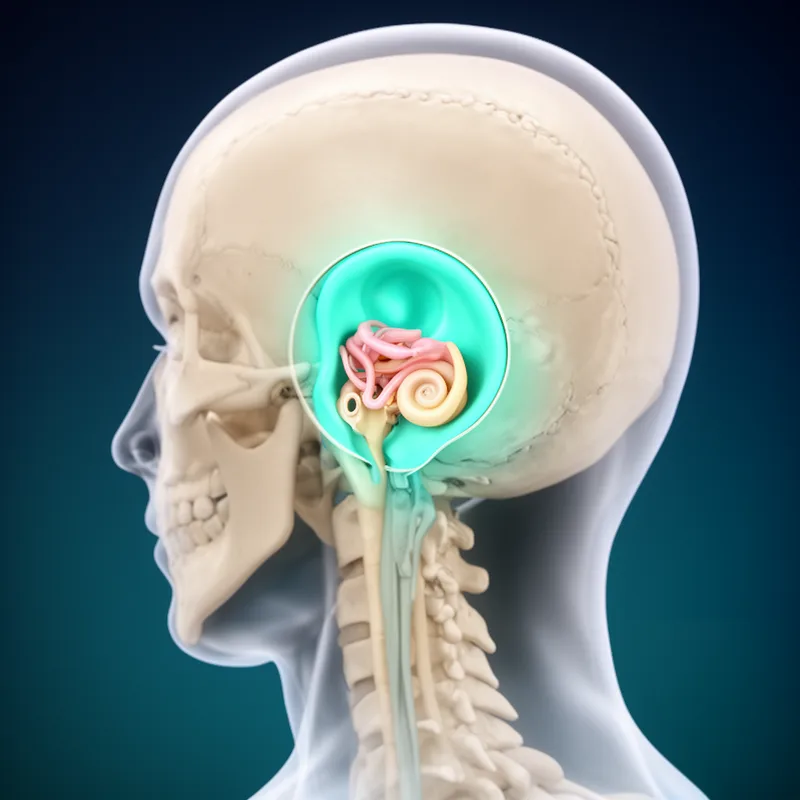
- In some mammals, the petrosal bone is a distinct element of the temporal bone that aids in hearing.
- petrosal nerve
- petrosal sinus
- superior petrosal
Examples
-
The petrosal bone forms part of the base of the skull, providing protection for important structures.
-
The anatomy of the petrosal bone is crucial for understanding the evolutionary adaptations of various species.
-
The petrosal vein should be identified and protected from injury.
Academic text (1996) -
Its use has been extended by division of the superior petrosal sinus to remove larger acoustic neuromas.
Academic text (2004) -
The greater and lesser superficial petrosal nerves and the chorda tympani nerve may be absent.
Academic text (1996) -
The petrosal nerve is transected, and bipolar cautery is performed to prevent the regeneration of facial nerve motor axons from traveling that route.
Academic text (2004) -
Elevation of the dura might also injure the geniculate ganglion and petrosal nerves because these structures are sometimes adherent to the dura.
Academic text (2004) -
Finally, elevating the head to promote venous drainage and diminish intracranial pressure could lead to air embolism through the superior petrosal sinus.
Academic text (2004) -
An incision is made in the dura 2 mm from the anterior edge of the sigmoid sinus and inferior to the superior petrosal sinus.
Academic text (1996) -
The geniculate ganglion is lateral and rostral to the VIIIth nerve ganglion. The greater superficial petrosal nerve is present.
Academic text (2003)
Surface Forms
Etymology
Petrosal comes from the Greek petros meaning 'rock', the same root in petroleum ('rock oil'), so a petrosal bone is like a small 'rock-like' piece of the skull. That's why the petrosal is the hard part of the temporal bone that helps protect hearing and balance.

