

pervious


 1
7.8
1
7.8
- adjective
- /ˈpɜrviəs/
- At this site, however, stormwater is managed with bio-retention basins, swales, green roof systems, and pervious pavement.
- pervious concrete
Examples
-
Glaspey has been at the forefront in developing the proper tools and construction methods for pervious concrete.
Academic text (2016) -
Many of the tools developed by Glaspey are being used in the placing and finishing of pervious concrete today.
Academic text (2016) -
The park features pervious pathways that allow rainwater to soak into the ground.
-
The new roofing system is designed to be pervious, ensuring that rainwater drains effectively.
-
Using pervious materials in urban planning helps reduce flooding by allowing water to permeate the surface.
Synonyms
 23
4.6
23
4.6
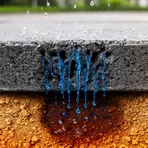
Full of small holes that let water or air pass through
 4
5.8
4
5.8
A material that lets water or air pass through it
Antonyms

How Permeable

Surface Forms
Morphology
pervious = perv + ious
The adjective is formed with the productive suffix '-ious' on a Latin-derived stem meaning 'through' (per- + via), but the stem 'perv' is not a standalone English word, so learners may only partially infer the meaning.
Etymology
Pervious comes from the parts per- and via, which mean 'through' and 'way'. A helpful way to remember it is to think of via ('way') or the common word permeable; pervious describes something that lets water, air, or light pass 'through' it.