

to personate
- verb
- /ˈpɜrsəˌneɪt/
- Archaic
- The artist personates nature in her paintings.
Examples
-
The novelist chose to personate nature, giving the forest desires and moods.
-
In ancient myths, poets would often personate the sun as a mighty chariot driver.
-
Many cultures personate abstract concepts such as Justice or Death in art and storytelling.
-
He often personated the sun in his poetry.
-
In ancient stories, nature itself is often personated as a gentle mother caring for her children.
-
The poet skillfully personated love, describing it as a warm fire that comforts and nurtures.
-
In her painting, the artist personated the seasons, giving each one distinct human qualities.
Synonyms
 27
6.1
27
6.1

To describe an idea or thing as if it were a human
 2
9.7
2
9.7
To give human qualities to an animal or object
 1
7.0
1
7.0
Show an idea clearly in something you can see or touch
How Human

Surface Forms
Morphology
Etymology
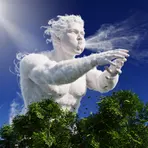
Personate also once meant to give human qualities to something and comes from the same Latin persona, so a helpful way to remember this old use is to think of giving a statue a 'mask' to make it seem like a person. That's why in older use to personate is like to 'personify' something, making it act or feel human.