
periglacial


 1
9.9
- adjective
- /ˌpɛrɪˈɡleɪʃəl/
- Specialized
- Scientists studied the periglacial region to understand how climate change affects glacial areas.
- periglacial processes
Examples
-
Algal abundances are greatest in those streams in which periglacial processes, acting over periods of perhaps a century, have produced a stable stone pavement in the streambed.
Academic text (1999) -
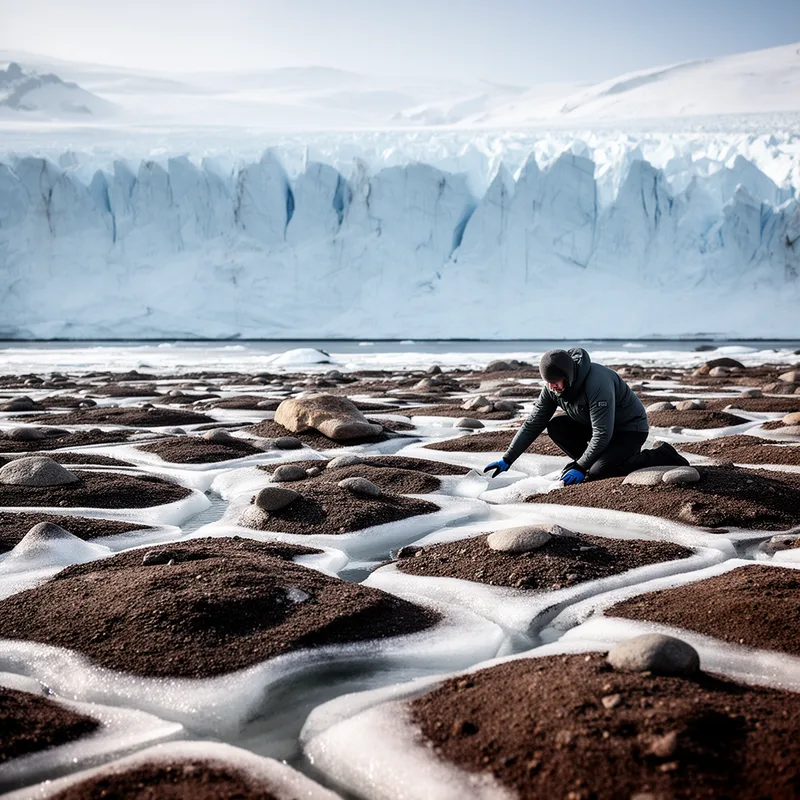
The land surface is composed of an unconsolidated sediment that has large (5 m), hexagonally patterned ground features caused by periglacial processes.
Academic text (1999) -
These stone pavements are similar to those commonly found along the shores of alpine lakes, which form through periglacial processes.
Academic text (1999) -
We infer that the stone pavements in dry valley streams are also a result of periglacial processes acting over long periods of time, perhaps centuries or longer.
Academic text (1999) -
In particular, the configuration of the larger rocks in the stream channels is controlled mostly by fluvial and periglacial processes, in contrast to the large rocks on the landscape away from the stream channels, whose configuration is controlled by the strong winds.
Academic text (1999) -
Harris, S.A., and D.E. Pederson. 1998. Thermal regimes beneath coarse blocky materials. Permafrost and Periglacial Processes 9:107-120.
Academic text (2017) -
The periglacial landscape features unique landforms shaped by freeze-thaw cycles.
-
Vegetation in periglacial zones is adapted to survive harsh, cold conditions near glaciers.
Surface Forms
Morphology
Etymology
Periglacial is made of peri- meaning 'around' and glacial from glacier meaning 'ice'. So periglacial describes land 'around' glaciers where freezing and thawing shape the ground.