
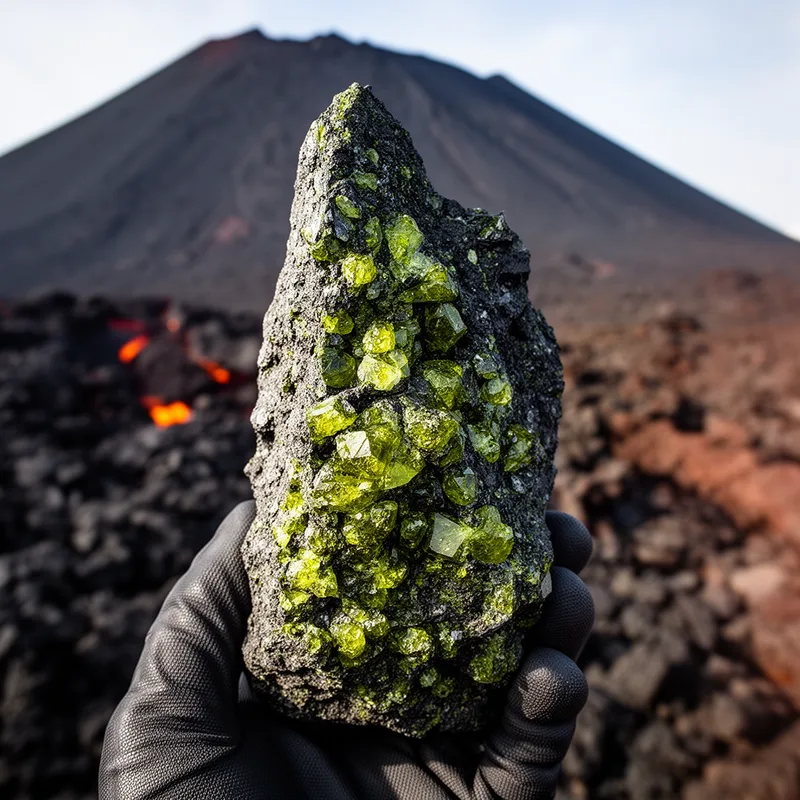
peridotite


 1
9.9
1
9.9
- noun
- /ˈpɛrɪdəˌtaɪt/
- Specialized
- The researchers discovered a large mass of peridotite that had been pushed to the surface by tectonic activity.
Examples
-
Oxides of silicon, aluminum, and magnesium (eclogites and peridotites in perovskite form)... 3486? 6350 kilometers.
Fiction book (1990) -
-Icelandic peridotite, naturally.
-
But Professor, that-that would be Icelandic peridotite.
-
Table 7: Water contents from Pingnan peridotite xenoliths Sample
Academic text (2018) -
Table 1: Rock types and mineral modes from Pingnan peridotite xenoliths.
Academic text (2018) -
Table 5: Major-element concentrations in spinels from Pingnan peridotite xenoliths
Academic text (2018) -
Table 3: Major-element concentrations in orthopyroxenes from Pingnan peridotite xenoliths
Academic text (2018) -
Geologists study peridotite because it helps them understand the composition of the Earth's mantle.
-
Samples of peridotite were collected from deep within the Earth to analyze their mineral content.
Surface Forms
Morphology
Etymology
Peridotite comes from the green gem peridot plus the ending -ite, which means 'rock' or 'stone'. Peridotite contains the mineral olivine, the same mineral that makes peridot green, so the name helps you remember this dark, often greenish rock.