
pentavalent
- adjective
- /ˌpɛntəˈveɪlənt/
- Specialized
- Arsenic can exist in both trivalent and pentavalent forms, affecting its chemical properties.
Examples
-
We know from elementary chemistry that arsenic has the propensity to be either trivalent or pentavalent.
Academic text (1999) -
Recent studies have shown that the trivalent forms of these metabolites are much more acutely toxic than their pentavalent forms and that they may be even more toxic than trivalent inorganic arsenic.
Academic text (2008) -
How can it be both pentavalent and and trivalent?
-
And of course they blend into one another as the as the stability of the pentavalent intermediate, if there were one gets less and less.
-
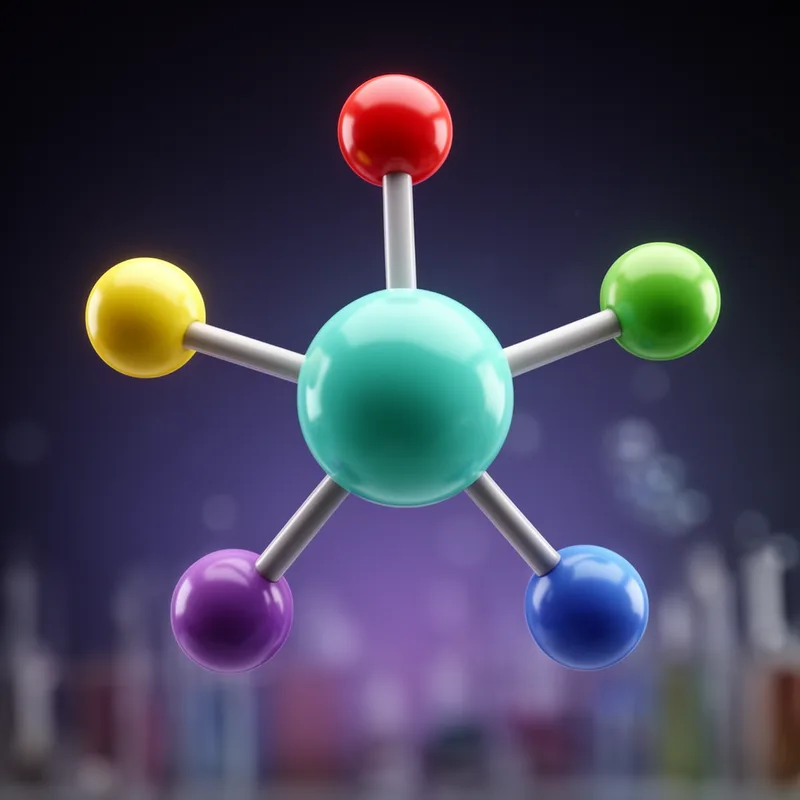
When studying chemical bonding, you may encounter compounds that are pentavalent and can connect with five different elements.
-
To form a pentavalent compound, a chemical must bond with five atoms of hydrogen.
Surface Forms
Morphology
pentavalent = valent (transparent) = penta + valent
Clear compositional formation: 'penta-' (five) + '-valent' (having a specified valence) yields 'having valence of five'.
Etymology
Pentavalent combines penta- meaning 'five' (like pentagon) and -valent from the Latin valere meaning 'to be strong' or 'have power'. So a pentavalent element is one that can join with or hold five other atoms, which is why chemists use the word for atoms with a valence of five.

