
pentane
- noun
- /ˈpɛnˌteɪn/
- Specialized
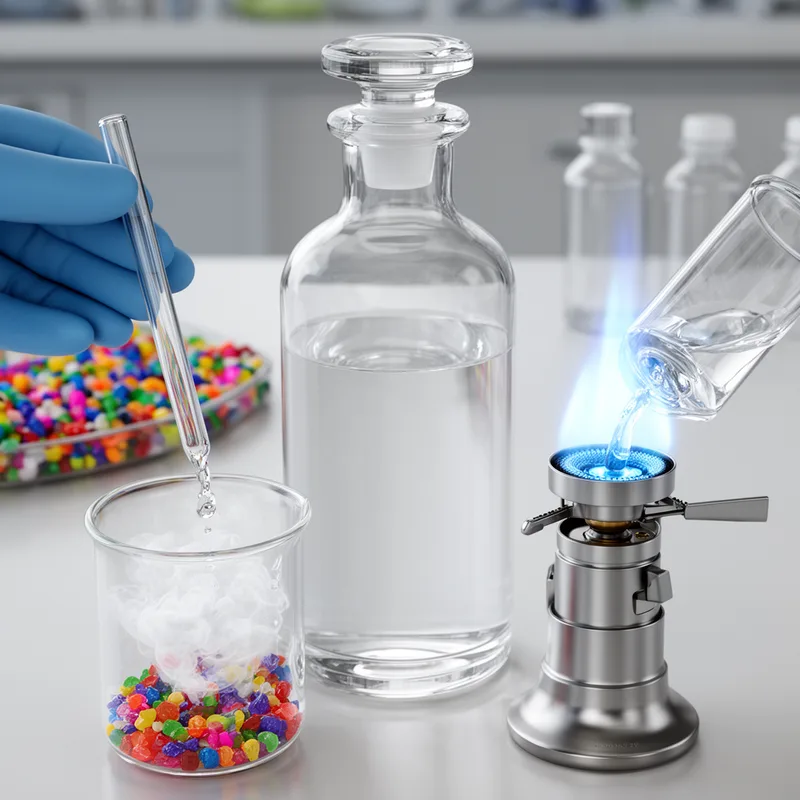
- Many camping stoves use pentane as a fuel to burn for cooking outdoors.
- pentane levels
- acetone and pentane
Examples
-
The pentane layer is removed and added to a tube containing 2 mL of 50 percent sodium hydroxide (NaOH) and 3 mL of pyridine.
Academic text (2003) -
Extraction into pentane was performed using the method described in the "Materials and Methods" section.
Academic text (2018) -
In order to extract any organocadmium compounds in the trapped mainstream smoke, 20 g of pentane was added to each sample.
Academic text (2018) -
Many small modular units with capacities of 1 or 2 megawatts use pentane as the binary fluid.
Academic text (1994) -
This tube is placed in a water bath at 45°C for 30 minutes to facilitate the evaporation of pentane.
Academic text (2003) -
In order to check if there were losses of cadmium during solvent exchange, 20 ng/g (a similar concentration to the total content of cadmium in the pads) Cd solution (as inorganic Cd) was prepared in 20 g of pentane.
Academic text (2018) -
In laboratories, pentane is often used as a solvent for various chemical reactions.
-
In the production of plastics, pentane serves as an important component due to its flammable properties.
Surface Forms
Morphology
pentane = pent + ane
Built from the numeric combining form 'pent-' plus the chemical suffix '-ane'; this is domain-specific chemical nomenclature and not derivable by an average B1 learner.
Etymology
Pentane comes from the part pent- meaning 'five', the same part you see in pentagon, plus the ending -ane used to name simple carbon-and-hydrogen chemicals. So pentane means a molecule with 'five' carbon atoms, which is why chemists use this name for the liquid with five carbons.

