
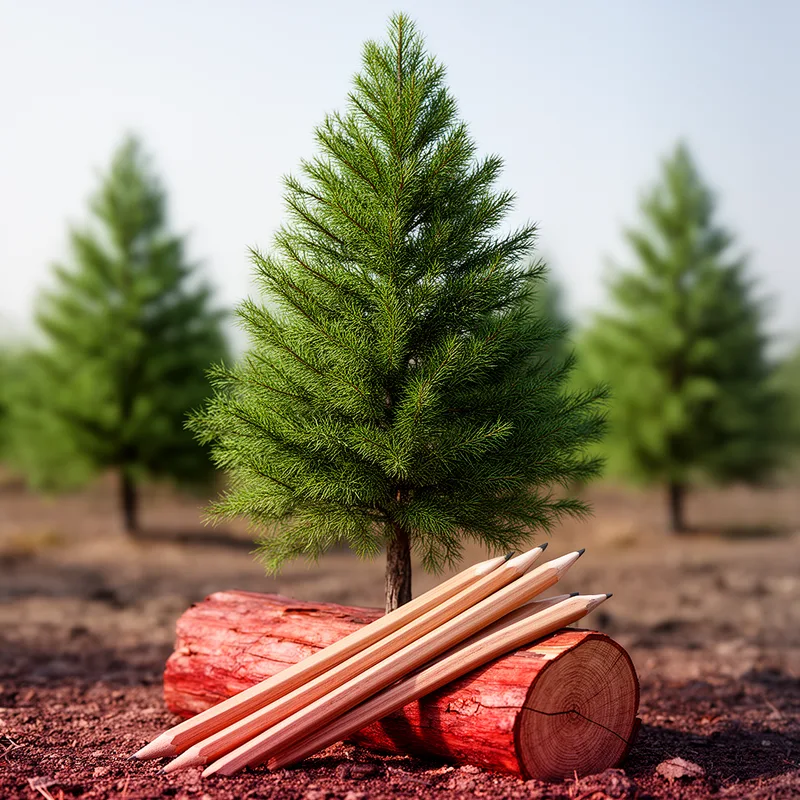
pencil cedar tree
- noun
- US
- The wood of the pencil cedar tree is prized for its fine grain and aroma.
Examples
-
Historically, pencil cedar trees were harvested extensively to supply the pencil industry.
-
The pencil cedar tree is known for its aromatic wood.
-
Botanists study the various species referred to as pencil cedar tree for their ecological significance.
-
Many artisans prefer using pencil cedar trees for their projects.
-
The wood of the pencil cedar tree is highly sought after for making quality pencils.
-
Historically, pencil cedar trees were a major source of wood for pencil manufacturing.
-
Artisans select the pencil cedar tree for its fragrant wood suitable for crafting high-end pencils.
Synonyms

A tall tree from eastern Africa and Arabia with fragrant and strong wood used for furniture
An evergreen tree, like the eastern red cedar, whose wood is used to make pencils

A tall African tree with wood that smells nice and lasts a long time for making furniture and houses
Surface Forms
Morphology
The phrase denotes a type of tree (cedar) associated with pencils — i.e., a cedar whose wood is suitable for making pencils — which is directly derivable from the constituents 'pencil' + 'cedar' + 'tree'. This noun–noun composition is a common, compositional pattern across languages and would be readily understood by a B1 learner who knows the constituent words.
Etymology
Pencil cedar tree gets its name because the tree's wood was used to make 'pencils'—the wood is easy to cut, straight-grained, and holds a sharp point, and it has a pleasant smell. So the name links the useful wood (cedar) to the object (pencil).

