
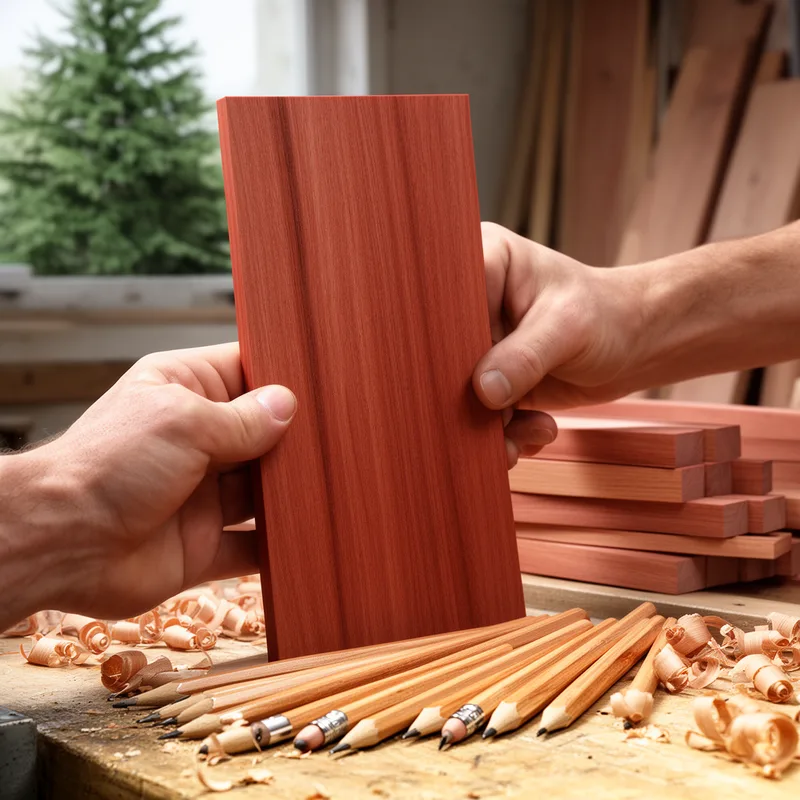
pencil cedar
- noun
- Specialized
- The best drawing pencils are often made from pencil cedar because of its fine texture.
Examples
-
Traditional pencil cedar is prized for its pleasant scent and smooth grain.
-
Sustainable harvesting of pencil cedar is important for the pencil industry.
-
The pencil cedar tree is known for its aromatic wood.
-
Many artists prefer using pencil cedar for sketching.
-
Many artists prefer using pencil cedar for sketching due to its excellent ability to hold a fine point.
-
The best drawing pencils are often made from pencil cedar because of its smooth texture and durability.
-
Sustainable harvesting of pencil cedar helps ensure the quality and supply of wood for pencil manufacturing.
Synonyms

 12
3.1
12
3.1

Long-lasting, pleasant-smelling wood used for furniture and lining closets to keep moths away


 1
3.5
1
3.5
Wood from cedar trees that smells pleasant, resists rot, and is used for chests and furniture

A light fragrant wood that people use to make cigar boxes and protect cigars
Surface Forms
Morphology
This is a straightforward noun–noun compound where 'pencil' modifies 'cedar', indicating a type of cedar (or cedar wood) associated with pencils. A B1 learner who knows both words can readily infer it means the cedar wood used for pencils; the compositional attributive pattern is common and predictable.
Etymology
Pencil cedar can also mean the wood from that tree, not just the tree itself. The wood was the material pencil makers liked for its fine grain and fragrance, so the phrase came to mean the cedar wood 'for making pencils'.